Marble Mechanics 813-625-3377
South Tampa

Marble Polishing South Tampa

Expert Restoration for Hyde Park, Davis Islands, Palma Ceia, and Beyond

Marble polishing South Tampa is more specialized than it sounds. The peninsula neighborhoods running from Hyde Park to Davis Islands down to Culbreath Isles contain some of the oldest and highest-value marble in the entire Tampa Bay area, installed in homes built a century ago and in waterfront estates completed last year.

  • Free on-site assessment
  • Written quote before any work begins
  • No obligation
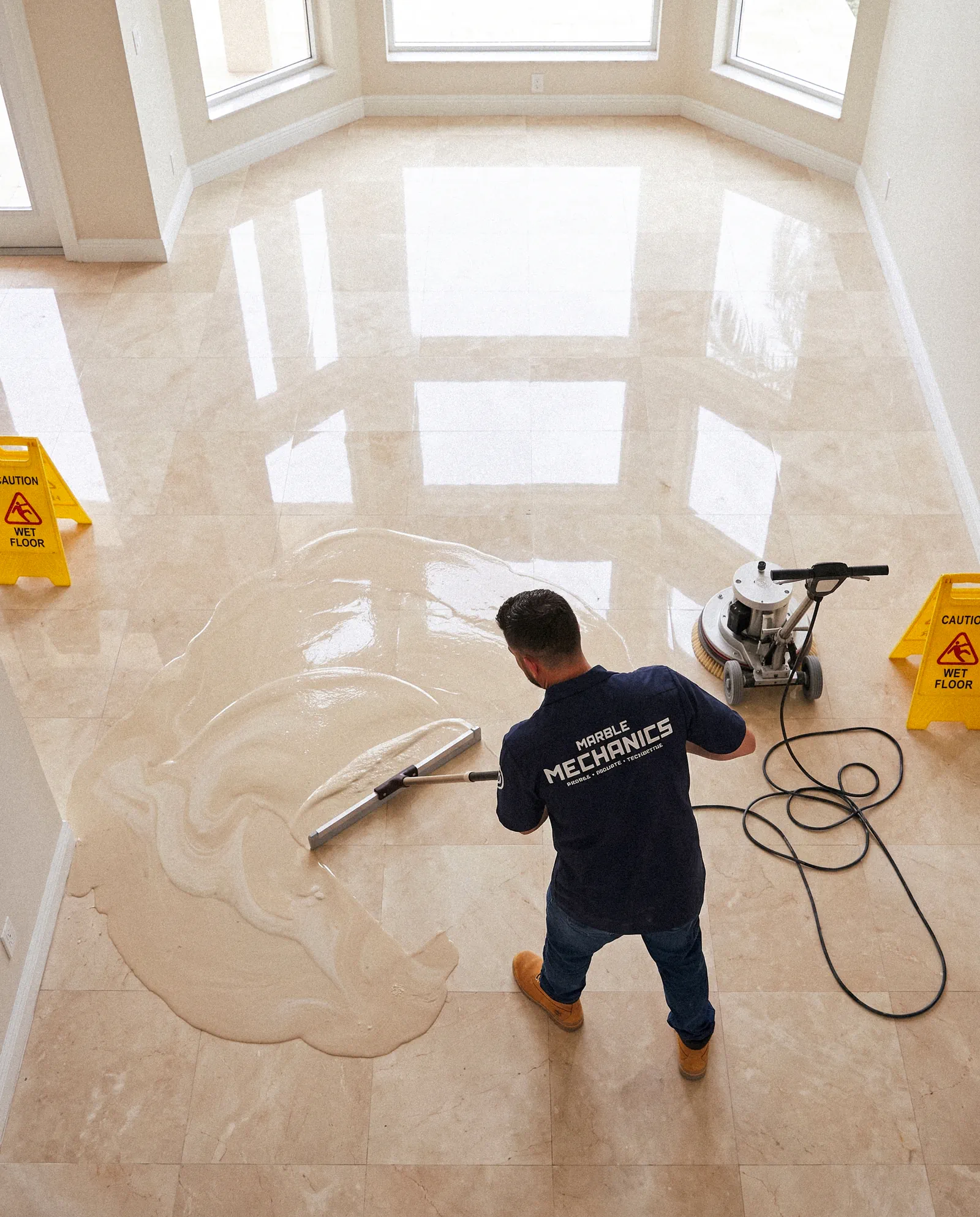
A Marble Mechanics technician squeegeeing polishing slurry from a marble floor in a South Tampa home
27+ Years of experience Restoring marble, travertine, granite and other natural stone.
27+Years of Experience
Five-Star Google Rating
79Cities Served
FreeOn-site Assessments

Marble Mechanics has been restoring marble across South Tampa for 27+ years, led by founder Oscar Tineo. The team knows these neighborhoods, the stone types specific to them, and the problems that appear here and nowhere else in the region.

If your marble floors, foyer, or staircases look dull, etched, or just wrong, this page explains exactly what is happening and what Marble Mechanics can do about it.

Why South Tampa Marble Is Different From the Rest of Tampa Bay

South Tampa is a peninsula, and that geography matters for natural stone. The waterfront neighborhoods on the west side, Beach Park, Culbreath Isles, and Bayshore Beautiful, sit directly on Tampa Bay and Hillsborough Bay. Salt air, high ambient humidity, and sea spray create conditions that accelerate marble etching and surface absorption more aggressively than inland areas like Brandon or Carrollwood.

Marble Mechanics has measured this difference firsthand across hundreds of South Tampa jobs. A Calacatta marble floor in a Culbreath Isles home that has not been sealed in 18 months will show significantly more surface porosity than the same stone in a Lutz home under the same maintenance schedule. The proximity to open water keeps the air moisture content elevated year-round. Tampa Bay's 73% average humidity is already high by national standards, and a waterfront lot in Beach Park runs even higher.

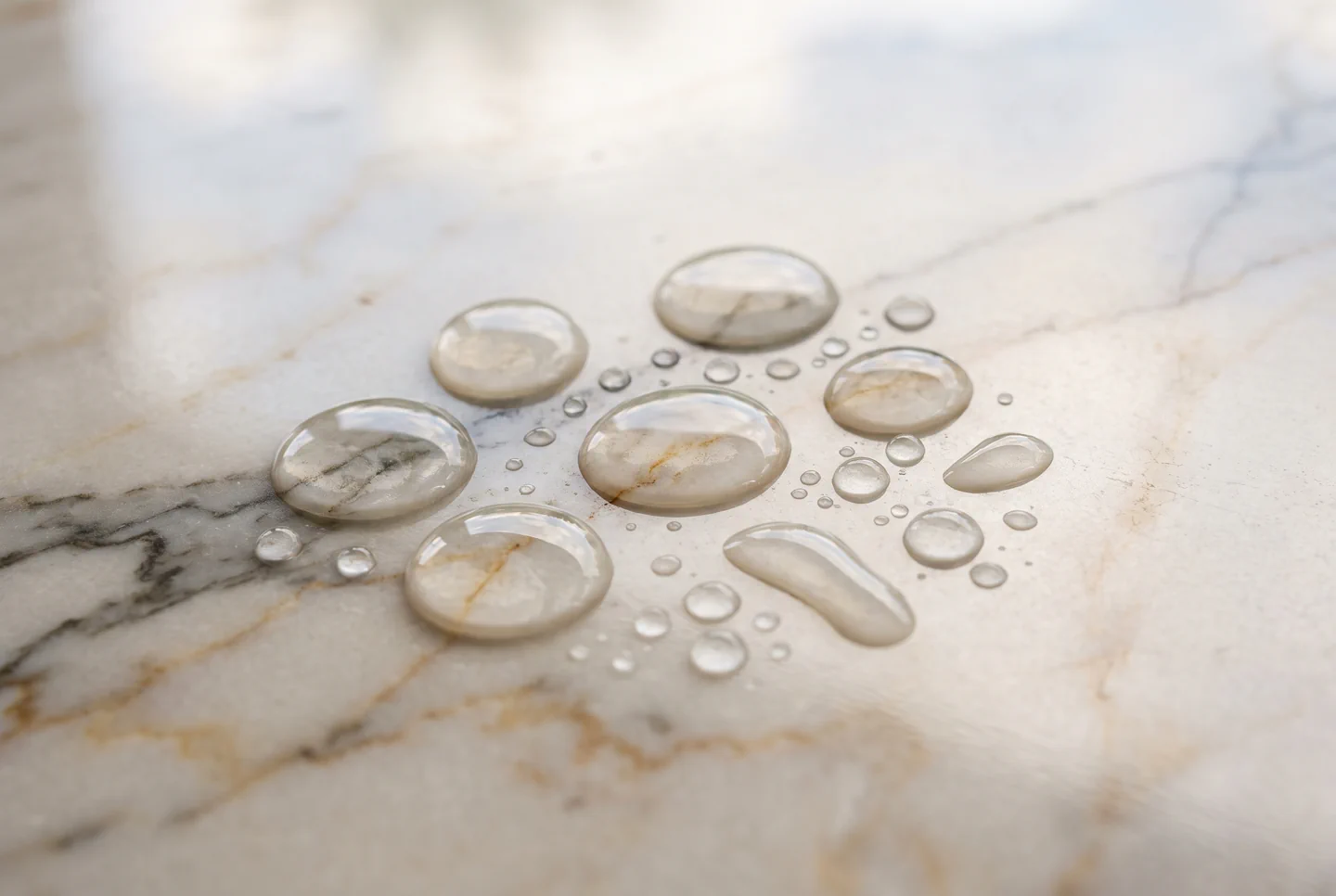
Water beading on a sealed marble surface at a South Tampa property
Water beading on sealed marble at a South Tampa property.

The fix is not complicated, but it requires the right sealer and the right resealing schedule. For Beach Park and Culbreath Isles properties, Marble Mechanics uses a breathable impregnating sealer rated for high-humidity environments rather than a standard penetrating sealer designed for interior residential use. That distinction matters. A sealer that traps moisture inside the stone in a waterfront home will cause spalling and surface pop-off within two to three years. A breathable formulation lets vapor move out of the stone while still blocking liquid penetration.

Hyde Park: The Topical Sealer Problem

Hyde Park is where Marble Mechanics encounters the most complicated marble restoration work in all of South Tampa. The Victorian and Craftsman homes in this neighborhood were built in the late 1800s and early 1900s. Many of them have original marble in entry foyers and on grand staircases, in place for 80 to 100 years, maintained over the decades with whatever products were available at the time: paste wax in the 1940s and 1950s, commercial floor wax through the 1970s, and topical acrylic sealers from the 1980s onward.

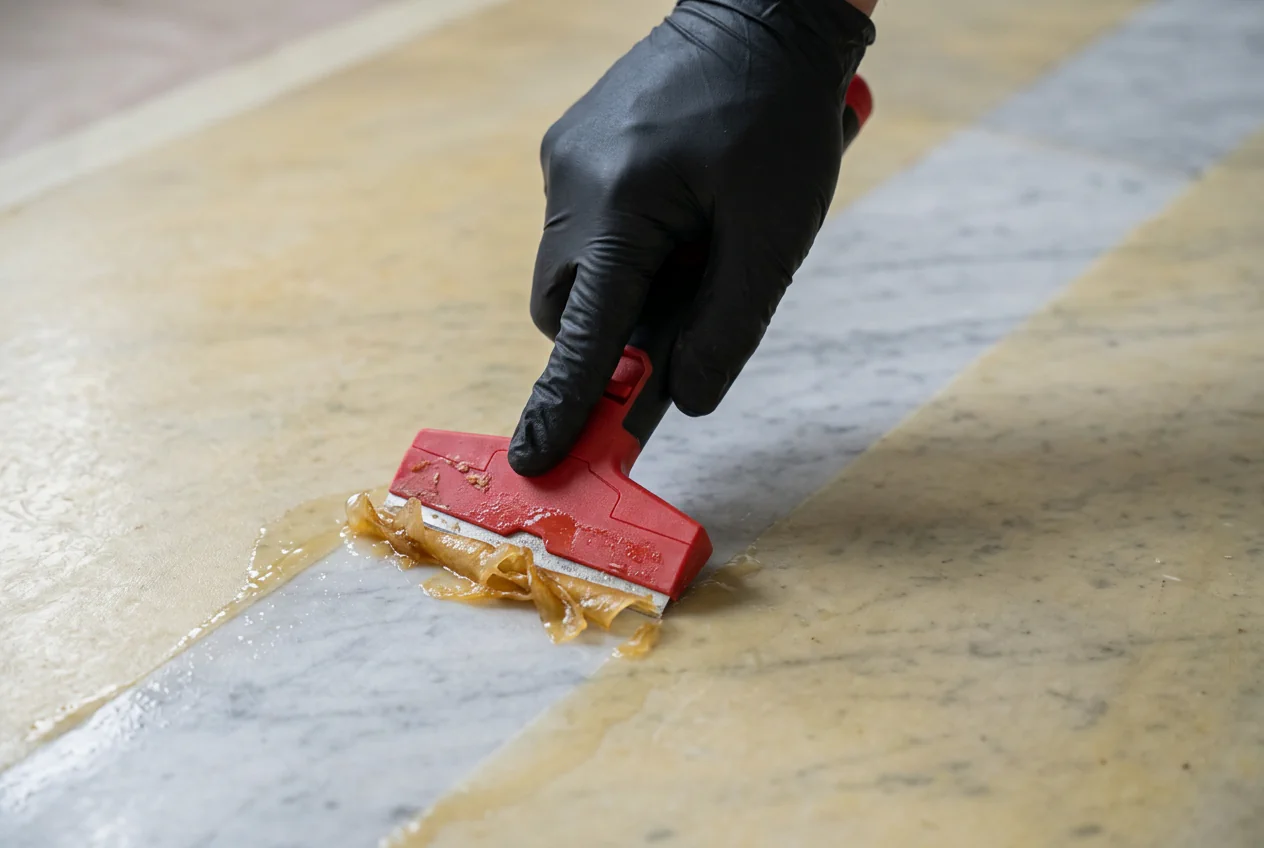
A gloved hand scraping yellowed acrylic sealer off a marble floor to expose the stone beneath
Lifting decades of topical acrylic off a Hyde Park marble floor. The marble under it has never been polished.

The problem with topical acrylic sealers on marble is that they film-build on the surface rather than penetrating it. Each new coat goes on top of the previous one. After 30 to 50 years of this treatment, a Hyde Park marble floor can have 10 to 15 layers of acrylic product sitting on top of the stone. The floor looks dull, yellowed, and plasticky. Standard polishing does nothing because you are polishing the acrylic, not the marble. Most contractors see this, do not recognize it for what it is, and walk away saying the stone is beyond restoration.

The process Marble Mechanics uses in these situations begins before any polishing starts. The acrylic layers are chemically stripped using a professional-grade alkaline stripper, sometimes in two to three rounds depending on how many layers have built up. The stripper is applied, allowed to dwell, then scrubbed and extracted. Once the stone surface is clean and free of old topical product, the actual marble underneath can be properly assessed. In most Hyde Park homes Marble Mechanics has worked in, the original marble below the acrylic buildup is in remarkable condition. Once stripped, honed, and polished back to a genuine stone finish, these 100-year-old floors look extraordinary.

Marble Polishing South Tampa: What the Full Restoration Process Involves

Marble polishing South Tampa covers floors, foyers, staircases, bathroom walls, and outdoor covered surfaces. Marble Mechanics handles each surface type with a process tailored to the stone and condition, though the core sequence is consistent across every neighborhood.

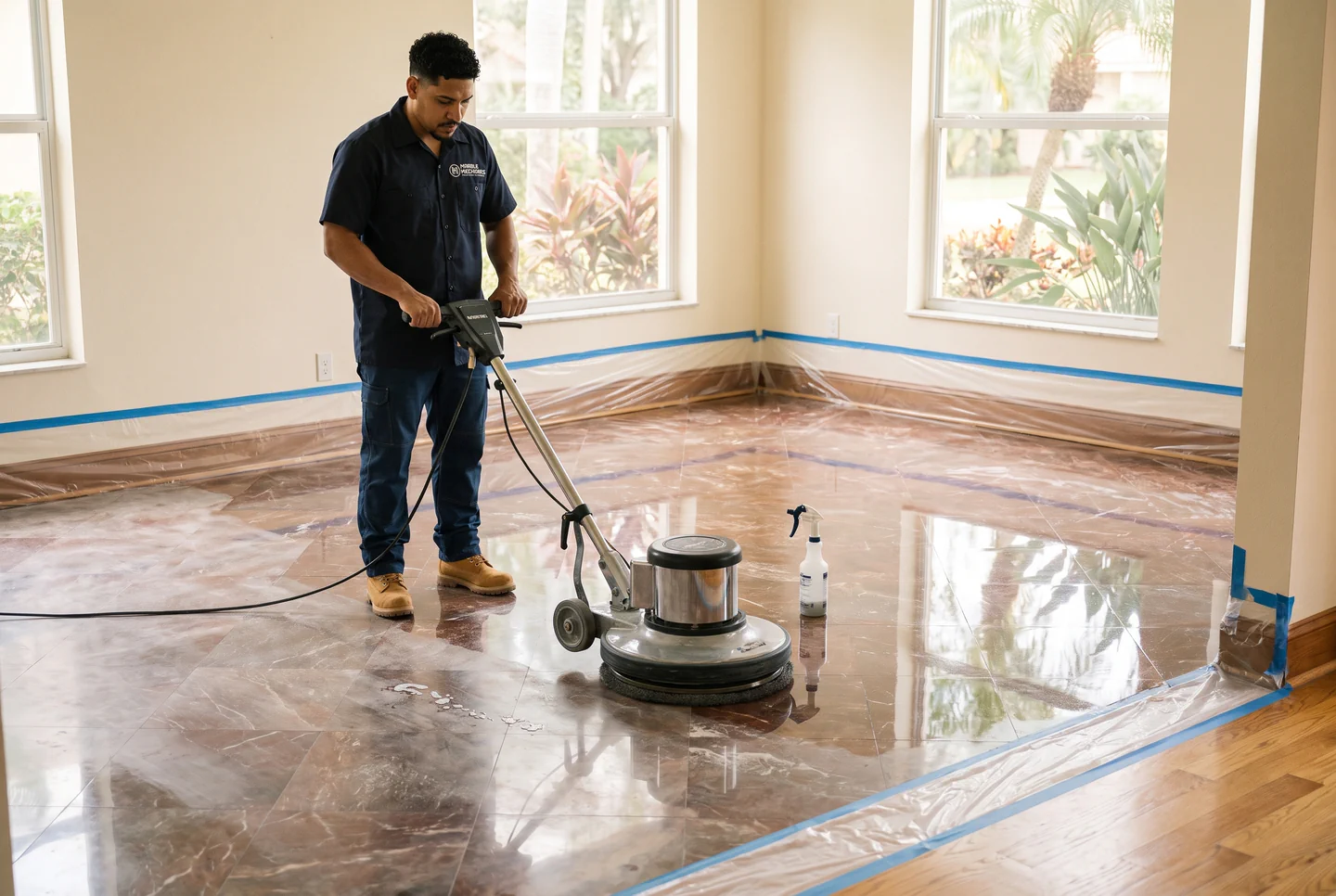
A Marble Mechanics technician running a floor machine on a marble floor in a South Tampa home
Polishing a South Tampa marble floor, with the walls and baseboards masked off before the work starts.

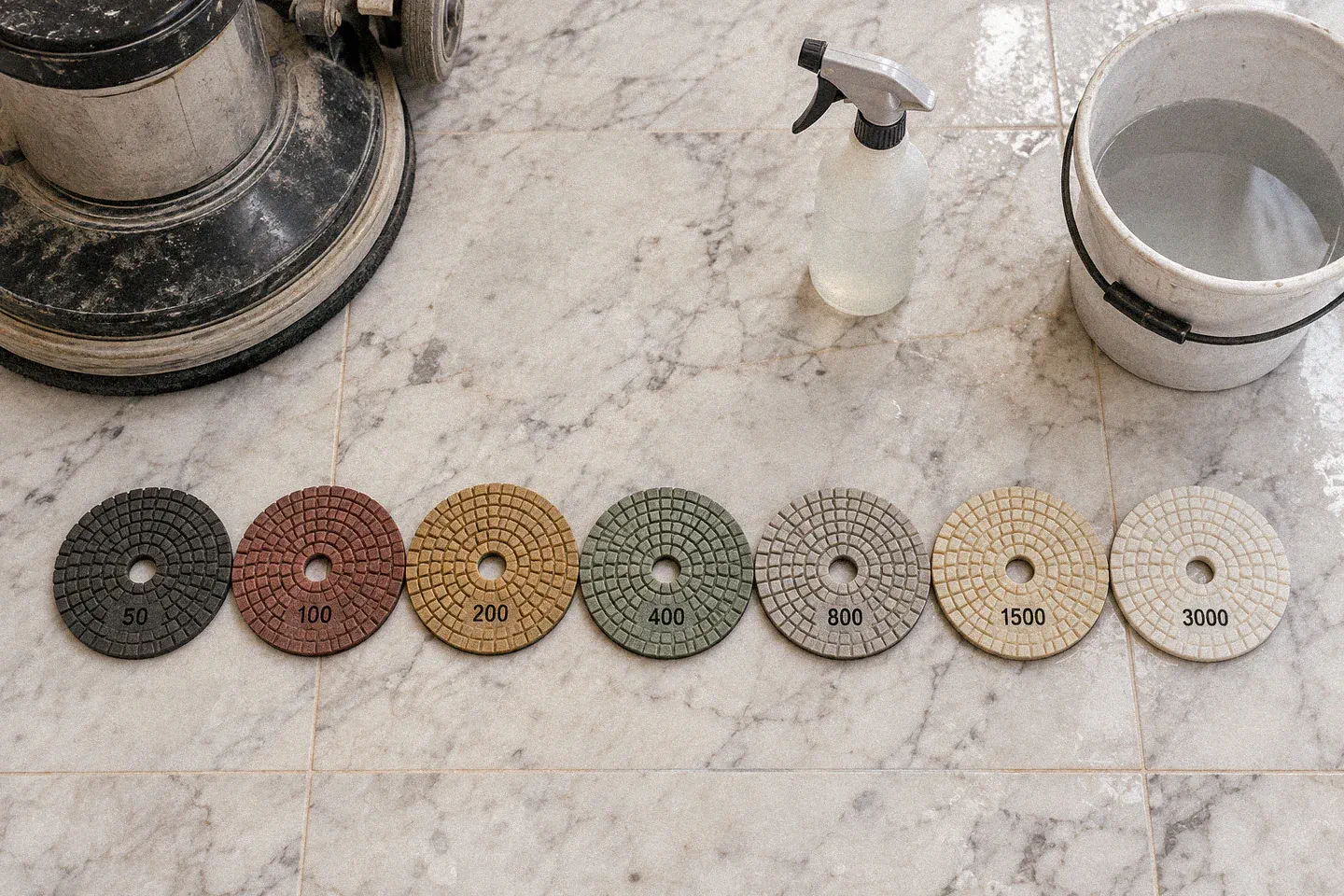
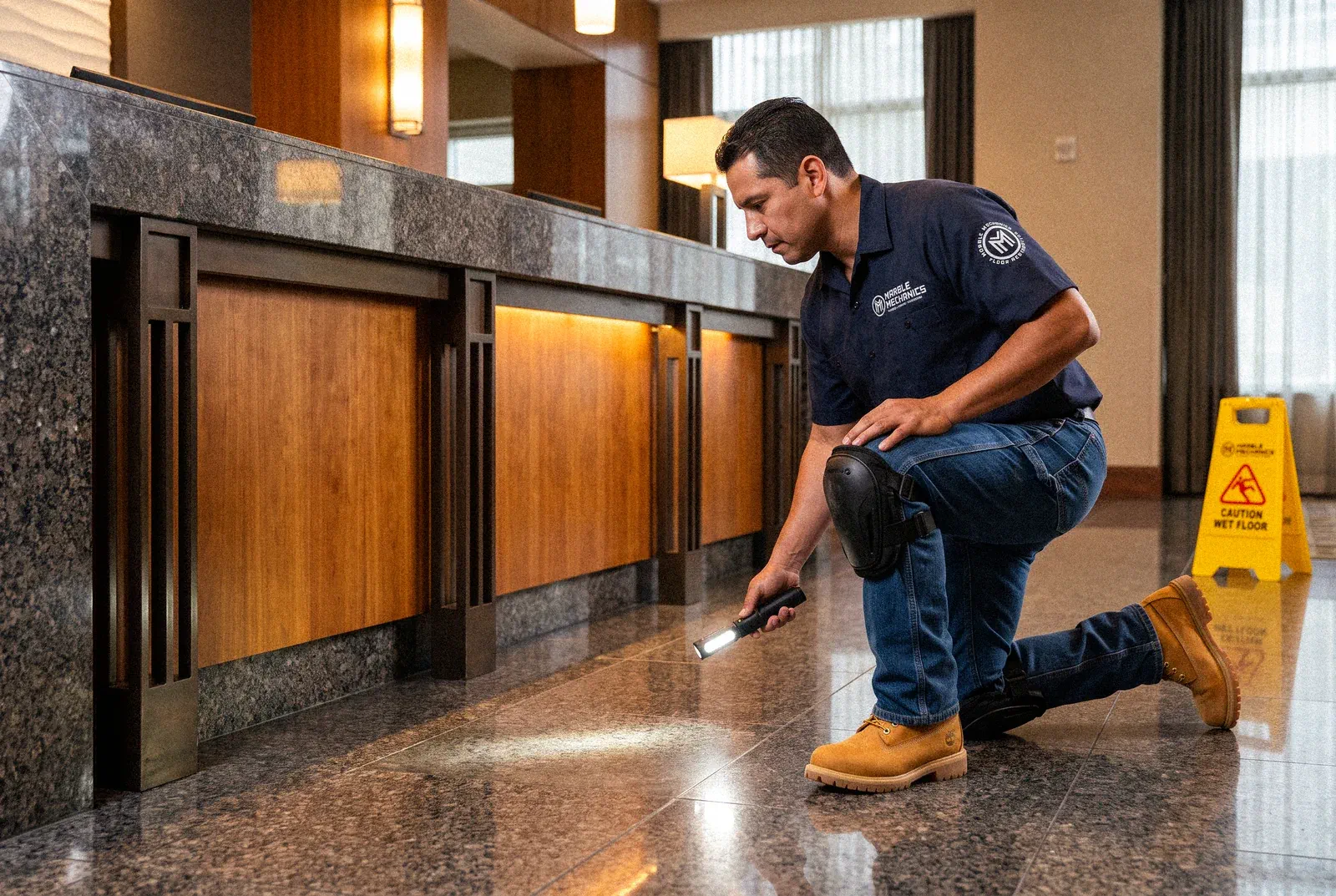
The standard restoration sequence starts with an inspection under raking light to identify etch marks, scratches, deep stains, lippage between tiles, and any structural cracks. That assessment determines the starting grit. A floor with moderate surface scratches and etching typically begins at 100 or 200-grit diamond tooling. A floor with deep scratches or significant lippage may start at 50-grit. From there, the process progresses through 400, 800, 1500, and 3000 grit before applying a crystallization compound. The compound reacts chemically with the calcium in the marble to form a hard, reflective surface layer that is more durable than the original factory finish.

Diamond polishing pads laid out in grit order from 50 to 3000 beside a floor machine on marble
The grit progression a marble floor runs through, 50 up to 3000, before the crystallization pass.

Marble grout cleaning and recoloring is included as part of the restoration when grout lines are stained or discolored. Natural stone grout requires pH-neutral cleaners and penetrating colorants that bond into the substrate without affecting the marble surface, which is a different process than standard tile grout cleaning. A freshly polished marble floor next to gray, streaked grout looks unfinished. Marble Mechanics cleans the grout, applies color-matching when needed, and seals as part of the same visit.

For outdoor marble on covered lanais in Bayshore Beautiful and Davis Islands, the process is adjusted. Outdoor marble is exposed to UV, biological growth from the humidity, and foot traffic with grit and dirt tracked in from outside. Marble Mechanics starts with a deep clean using a stone-safe pH-neutral cleaner, removes any biological staining with an appropriate treatment, then hones and polishes the surface. Outdoor marble sealing uses a UV-resistant impregnating formula rather than an interior-grade sealer.

For full details on the broader marble polishing services Marble Mechanics offers across Tampa Bay, the main marble polishing page covers each service in depth.

Davis Islands: Calacatta Marble and the Soft-Stone Challenge

Davis Islands was developed in the 1920s and 1930s as a planned community on two man-made islands in Hillsborough Bay. The older bungalows on the north end of the island often have original terrazzo floors. But the waterfront estates on the south end, many built or renovated since 2000, feature high-end European marble: Calacatta, Statuario, and Bianco Carrara installed as large-format floor tiles, slab staircases, and bathroom walls.

Calacatta marble is one of the softest calcite stones in regular use. It etches faster than Carrara, reacts more readily to humidity, and requires a different diamond progression than harder marble varieties. Marble Mechanics uses finer grit increments on Calacatta to avoid over-cutting the surface, which can open the grain and make the stone more susceptible to future etching rather than less. The finishing step for Calacatta floors in Davis Islands homes typically uses a lower concentration crystallization compound applied with lighter pressure to avoid burning the surface of a stone that is already at the edge of its density range.

This is the kind of detail that separates a stone restoration professional from a contractor who does floors. Treating Calacatta the same way you would treat a harder stone like Crema Marfil produces a finish that looks right the day it is done and fails within 12 months. Marble Mechanics adjusts the process to what the stone requires, not to a standard recipe.

Palma Ceia: New Marble Meets Old Marble

Palma Ceia is a golf course community with large homes that are frequently renovated. Marble Mechanics regularly works in Palma Ceia homes where there are two generations of marble: an older floor in the main living areas, installed when the home was built 30 or 40 years ago, and new marble in a recently renovated kitchen or master bath. The challenge is matching the finish level between old and new stone so the house looks cohesive.

Factory-polished marble comes off the installation truck at a specific sheen level, typically around a 3000-grit equivalent. But the older marble in a Palma Ceia home that has been lived on for decades will have a slightly different finish character, even if it was professionally maintained. Marble Mechanics works both surfaces to the same finish standard, bringing the older floor up and calibrating the newer installation to match, so the transition between spaces is invisible.

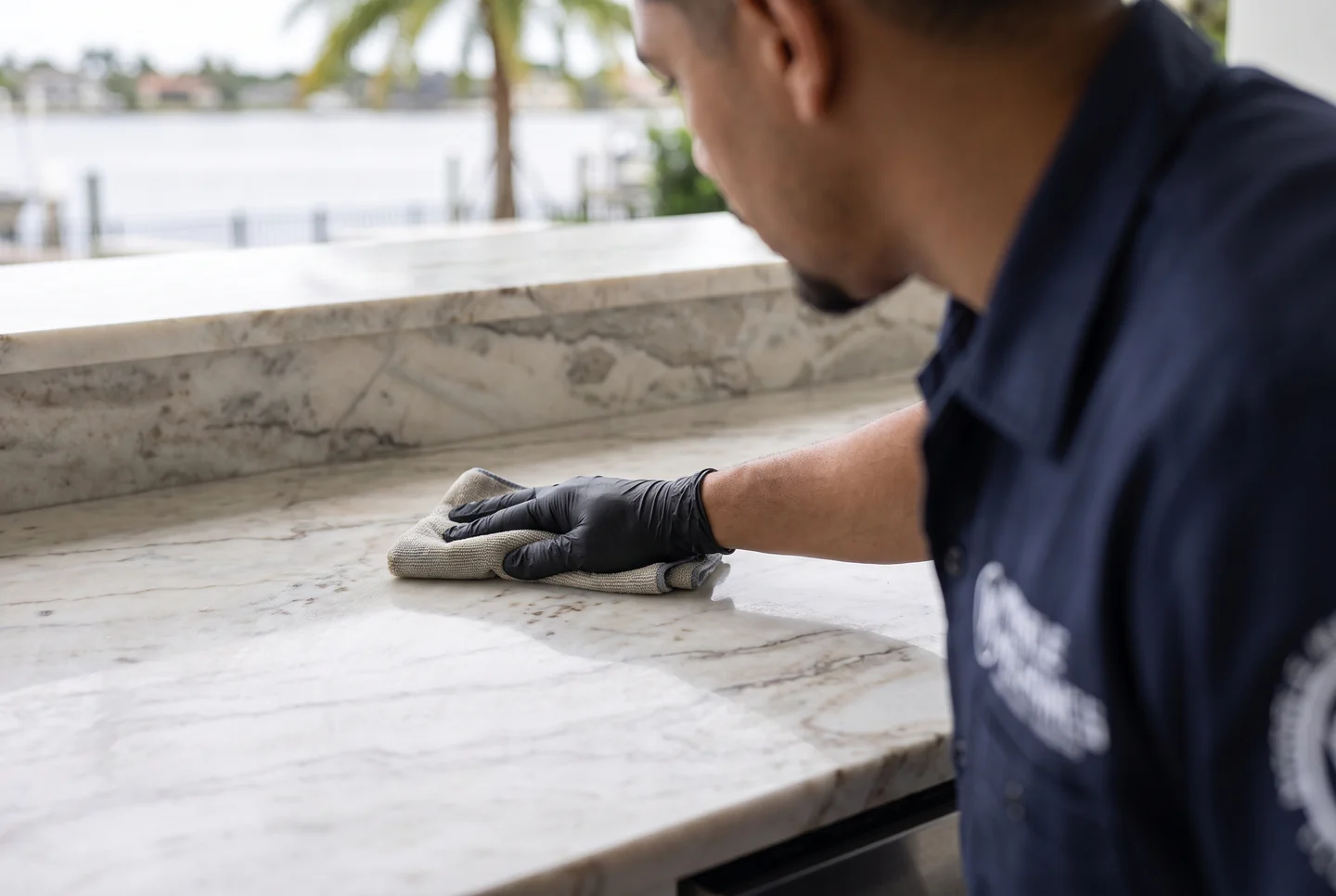
Palma Ceia homeowners also frequently ask about stone countertop polishing during the same service visit, particularly in homes where a kitchen renovation introduced new marble or quartzite countertops alongside existing marble floors. Marble Mechanics handles both surfaces on the same trip, which is more efficient for the homeowner and produces a consistent finish level across the whole room.

Harbour Island: Marble in Urban Condos and Townhomes

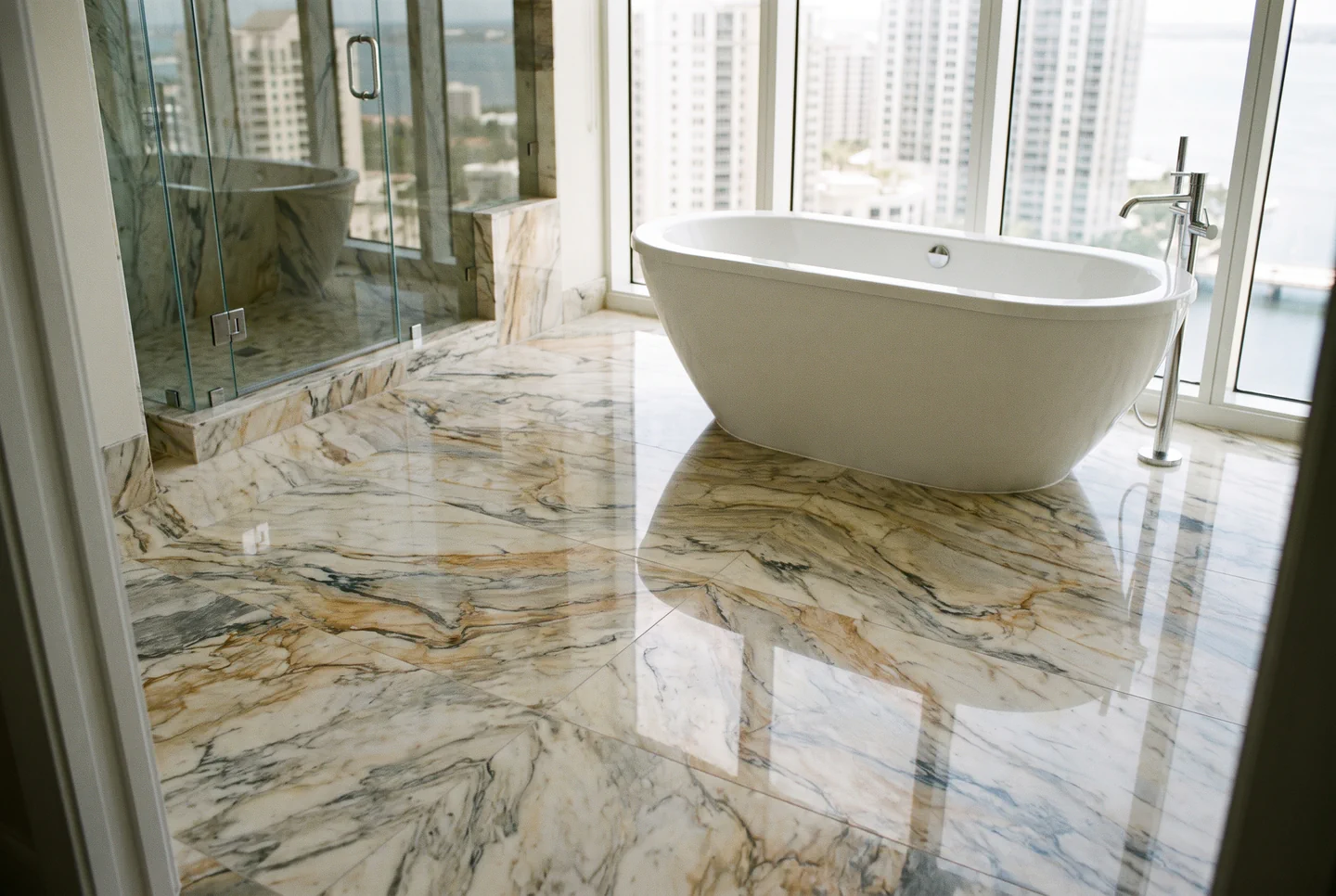
Harbour Island is a small urban island connected to downtown Tampa via bridge, with a mix of high-rise condos, townhomes, and luxury rentals. Marble here appears primarily in kitchens, master bathrooms, and entry corridors. The spaces are smaller than a Culbreath Isles waterfront estate, but the stone is often just as expensive. Harbour Island condo owners who invest in book-matched marble slab walls or large-format marble bathroom floors call Marble Mechanics when the surface starts showing the wear that comes from daily use in a high-humidity coastal environment.

A polished marble bathroom floor in a Harbour Island high-rise condo overlooking the water
A Harbour Island condo bathroom floor in polished marble, with the bay through the glass.

Condo restoration work requires additional consideration for building rules and neighbor access. Marble Mechanics carries full liability insurance and is experienced with the logistics of working in South Tampa high-rise buildings. The team is efficient with setup and breakdown, an important factor when a building requires elevator use and has restrictions on work hours. A Harbour Island bathroom marble restoration typically runs 3 to 4 hours from setup to final sealing, within a standard weekday window.

Natural Stone Sealing for South Tampa's Waterfront Climate

Every marble polishing job Marble Mechanics completes in South Tampa ends with sealing. That step is not optional. But the sealer selection and the resealing schedule differ by neighborhood and proximity to the water.

A Marble Mechanics technician hand-applying sealer to marble at a South Tampa waterfront property
Sealing marble at a waterfront South Tampa home, where salt air shortens the resealing interval.

For inland South Tampa neighborhoods like Palma Ceia and Hyde Park, Marble Mechanics applies a standard penetrating impregnating sealer, providing excellent stain protection for 12 to 18 months on marble floors under normal residential use. For waterfront properties in Beach Park, Culbreath Isles, and Bayshore Beautiful, a high-performance breathable impregnating sealer with a higher solids content is used, formulated to handle the accelerated moisture and salt air exposure those properties experience. That sealer also carries a shorter recommended resealing interval: 12 months rather than 18 for floors on the ground level of a waterfront home.

For more on sealing options and product selection, the natural stone sealing service page covers the full range of products and application methods used across Tampa Bay.

The Natural Stone Institute provides standards for professional stone care and sealing at naturalstoneinstitute.org. Their guidelines on sealer selection are consistent with the approach Marble Mechanics uses for Florida's high-humidity environments.

What South Tampa Marble Polishing Costs

Marble polishing South Tampa is priced by the square foot and by the condition of the stone. A straightforward polish and seal on a floor in good condition with light surface scratches and etching runs between $3 and $5 per square foot. A full restoration involving honing from a coarser starting grit, deep stain removal, grout cleaning, and sealing typically falls between $5 and $9 per square foot depending on the marble type and the scope of repairs needed.

Stripping and removing old topical acrylic sealer, the situation common in Hyde Park historic homes, adds to the process and the cost. Marble Mechanics provides a firm quote after an in-person inspection, and polishes a section of the floor before any agreement is signed so you can see exactly what the finished result looks like. No deposit required.

Average job size in Culbreath Isles and Beach Park waterfront homes runs 800 to 1,200 square feet of marble. Many of these are pre-listing restoration jobs, where the homeowner wants the floors restored before putting the property on the market. That investment is typically recovered several times over in sale price on a South Tampa waterfront property.

Why choose Marble Mechanics

Why Choose Marble Mechanics

Specialists, Not Generalists.Marble restoration is what we do every day. We focus exclusively on natural stone. We do not clean carpets, wash windows, or refinish wood floors. Stone is all we do, and we do it better than anyone in Tampa Bay.

27+ Years of Experience.

Oscar Tineo, our founder, has spent more than 27 years restoring marble across Tampa Bay, including the century-old floors of Hyde Park, the renovated homes of Palma Ceia, and waterfront properties in Beach Park and Culbreath Isles. That experience means we have seen and solved every marble problem imaginable in this climate.

Diamond Polishing, Not Coatings.

We restore the stone itself using progressive diamond abrasives. The results are permanent until new damage occurs. We never use wax, acrylic coatings, or temporary shine products that wear off in weeks.

Dust Free Process.

Our wet polishing technique and dust containment systems mean minimal dust during the restoration process. You do not need to vacate your home or cover every piece of furniture.

Honest Assessments.

If your marble does not need a full restoration, we will tell you. If a simple honing and sealing will solve the problem, that is what we recommend. We build long term relationships, not one time invoices.

Frequently asked

Frequently Asked Questions About Marble Polishing in South Tampa

The questions homeowners ask us most, answered before you book.

The questions South Tampa homeowners ask most. Something else in mind? We are happy to talk it through.

Book an estimate
How much is marble floor polishing?

Marble polishing in South Tampa typically ranges from $3 to $9 per square foot depending on the condition of the stone, the starting grit required, and whether stain removal, grout cleaning, or topical sealer stripping is needed. A straightforward polish and seal on marble in good condition with light surface scratches runs $3 to $5 per square foot. A full restoration with honing, deep stain removal, grout cleaning, and sealing falls between $5 and $9 per square foot. Stripping old acrylic topcoat buildup from Hyde Park historic homes adds to the scope. Marble Mechanics provides free in-home estimates and polishes a demo section of your floor before any agreement is signed. Call 813-625-3377 to schedule.

Is it possible to polish marble?

Polishing refreshes a floor that has lost its shine through normal wear but is otherwise in good condition. Full restoration means honing the surface back to a level surface, removing scratches and etch marks mechanically, then polishing to a finished shine. If you run your hand across the floor and can feel scratches or rough patches, that is a restoration job. If the floor looks dull but feels smooth, polishing may be enough. Marble Mechanics can make that determination within five minutes of looking at the floor under raking light, and the free demo gives you a clear before-and-after on a small section so you see exactly what is possible.

Can MARBLELIFE fix stained marble?

A yellow, plastic looking marble floor is almost never stained stone. It is old acrylic or wax sitting on top of the marble, yellowing with age and holding dirt. Stripping it takes the coating off and exposes the stone underneath, which is usually sound. Real staining, where something has soaked into the marble itself, is drawn out with a poultice rather than polished off. We check which one you have at the assessment, because they are two different jobs.

Do marble floors require maintenance?

On a waterfront lot with direct salt air exposure, marble floors on the main living level should be resealed every 12 months. Floors on upper stories with less direct air exposure can go 18 months. The water bead test is the practical check: put a few drops of water on the floor surface and wait 10 minutes. If the water absorbs into the stone rather than beading on the surface, the sealer has failed and the floor needs resealing before it takes on staining or salt residue.

What is the downside of marble floors?

Marble is calcium based, so acid etches it: vinegar, citrus, wine, coffee and most bathroom cleaners leave dull marks that cleaning cannot remove. It is softer than granite, so grit tracked in scratches it underfoot. And it is porous, so it stains if the sealer has worn through. The flip side is that every one of those is repairable, because marble is solid stone and the damage is in the top layer. A floor that looks ruined is usually a surface problem, not a replacement.

What kind of stone does MARBLELIFE work on?

All natural stone can be polished. The only surfaces Marble Mechanics cannot restore to a high polish are engineered materials: manufactured quartz, porcelain tile, and ceramic. If the surface in your South Tampa home is natural marble, travertine, limestone, onyx, or granite, it can be fully restored regardless of its current condition.

Which polish is best for Italian marble?

Carrara, Calacatta and Statuario are Italian marbles and they all take the same treatment: diamond abrasives on the stone itself, not a polish out of a bottle. The grit sequence is what decides the finish, run up through progressively finer heads until the surface reflects. A consumer marble polish lifts a shine on top for a few weeks and leaves the scratches and etching underneath untouched. The harder and denser the marble, the higher the finish it will take and hold.

How much to refinish marble?

Marble Mechanics uses diamond tooling without water on most marble floors, which means no wet slurry and minimal dust. For jobs that require water, a wet vacuum extraction system captures slurry at the pad. Furniture is moved and protected before work starts. Adjacent rooms stay fully accessible throughout. Most South Tampa homeowners are comfortable staying home during the restoration, and early starts or late finishes are available on request.

How much does it cost to professionally clean marble?

Consistently, yes. Marble floors in a waterfront South Tampa home are a premium feature. Dull, scratched, or stained marble reduces perceived value and gives buyers a negotiating point. Restored marble floors read as a move-in-ready property and tend to photograph well, which matters significantly in the online listing stage. The cost of a 1,000-square-foot marble restoration in Culbreath Isles is typically recovered in the final sale price many times over. Marble Mechanics has completed pre-listing marble work in South Tampa for 27+ years and has never had a homeowner say it was not worth it.

Service areas

At home in Tampa Bay.

Oscar Tineo and Marble Mechanics provide marble polishing South Tampa and throughout Tampa Bay's counties. Call to schedule a free estimate and in-home demonstration.

Marble Mechanics stone restoration service area map for Tampa Bay The 6 Florida counties Marble Mechanics serves: Hillsborough, Pinellas, Pasco, Manatee, Sarasota, Polk. 40 cities are marked. Hillsborough County, 33 cities served Pinellas County, 19 cities served Pasco County, 9 cities served Manatee County, 8 cities served Sarasota County, 5 cities served Polk County, 5 cities served Valrico, Hillsborough County Westchase, Hillsborough County Carrollwood, Hillsborough County Lutz, Hillsborough County Ruskin, Hillsborough County Apollo Beach, Hillsborough County Temple Terrace, Hillsborough County Sun City Center, Hillsborough County Largo, Pinellas County Dunedin, Pinellas County Palm Harbor, Pinellas County Tarpon Springs, Pinellas County Seminole, Pinellas County Pinellas Park, Pinellas County St. Pete Beach, Pinellas County Land O Lakes, Pasco County New Port Richey, Pasco County Trinity, Pasco County Zephyrhills, Pasco County Palmetto, Manatee County Lakewood Ranch, Manatee County Parrish, Manatee County Osprey, Sarasota County Siesta Key, Sarasota County Winter Haven, Polk County Auburndale, Polk County Bartow, Polk County Davenport, Polk County Tampa, Hillsborough County Tampa Brandon, Hillsborough County Brandon Plant City, Hillsborough County Plant City St. Petersburg, Pinellas County St. Petersburg Clearwater, Pinellas County Clearwater Wesley Chapel, Pasco County Wesley Chapel Dade City, Pasco County Dade City Bradenton, Manatee County Bradenton Sarasota, Sarasota County Sarasota Venice, Sarasota County Venice Lakeland, Polk County Lakeland Riverview, Hillsborough County Riverview
Stone restoration across 79 cities in Tampa Bay. Based in Tampa.
Hillsborough County 33

Tampa, South Tampa, Davis Islands, Hyde Park, Bayshore Beautiful, Palma Ceia, Beach Park, Culbreath Isles, Avila, Swann Estates, Harbour Island, Westshore, Channelside, Brandon, Riverview, Valrico, Seffner, Mango, Lithia, Fish Hawk, Plant City, Ruskin, Sun City Center, Apollo Beach, Gibsonton, Carrollwood, Lutz, Temple Terrace, Westchase, New Tampa, Town N Country, Ybor City, Seminole Heights

Pinellas County 19

St. Petersburg, Clearwater, Largo, Dunedin, Palm Harbor, Safety Harbor, Tarpon Springs, Tierra Verde, St. Pete Beach, Treasure Island, Madeira Beach, Indian Rocks Beach, Redington Beach, Indian Shores, Seminole, Pinellas Park, Gulfport, Belleair, Pass-a-Grille

Pasco County 9

Wesley Chapel, Land O Lakes, New Port Richey, Port Richey, Hudson, Odessa, Trinity, Zephyrhills, Dade City

Manatee County 8

Bradenton, Palmetto, Lakewood Ranch, Anna Maria Island, Holmes Beach, Longboat Key, Parrish, Ellenton

Sarasota County 5

Sarasota, Osprey, Venice, Nokomis, Siesta Key

Polk County 5

Lakeland, Winter Haven, Auburndale, Bartow, Davenport