The Ultimate Travertine Maintenance Guide
Travertine is a stunning natural stone that adds elegance to any home, but it requires proper care, especially in Florida's climate. This comprehensive guide covers everything Tampa Bay homeowners need to know about keeping travertine in top condition based on 27+ years of professional restoration experience across Hillsborough, Pinellas, Manatee, Sarasota, and Pasco counties.
What Makes Travertine Different from Other Natural Stone
Travertine is limestone formed by mineral springs, characterized by natural holes, pits, and channels. It's more porous than most natural stone, absorbing liquids faster and reacting more readily to acidic substances.
Three common travertine finishes in Tampa Bay:
- Polished: glossy, reflective surface common on indoor floors; shows scratches easily
- Honed: smooth, matte finish popular in living areas; more forgiving with wear
- Tumbled: rustic, textured surface with rounded edges; most common on outdoor pool decks
Most Florida travertine is "filled," with natural holes closed using resin or cement. Over time, especially outdoors, fill material cracks or washes out, reopening holes that collect dirt and organic growth.
The Natural Stone Institute classifies travertine as a calcareous stone, meaning it contains calcium, and it reacts to acids including vinegar, citrus, wine, and many household cleaners.
Daily and Weekly Travertine Care
Regular maintenance doesn't require expensive products or complicated routines; consistency matters most.
Daily Routine
Dust and sand are primary daily threats. In Tampa Bay's sandy environment, fine grit acts like sandpaper under foot traffic. A soft-bristle broom or dry microfiber mop removes debris before it scratches surfaces, especially in high-traffic areas like entryways, kitchens, and pool lanais.
Weekly Cleaning
Once weekly, mop with warm water and pH-neutral stone cleaner. Use products specifically labeled for natural stone.
Safe to use:
- pH-neutral stone cleaners
- Plain warm water
- Mild dish soap, sparingly
- Soft microfiber mop or cloth
Never use:
- Vinegar or lemon juice
- Bleach
- Bathroom tile cleaners
- Steam mops on unsealed travertine
For spills, blot immediately with a clean cloth rather than wiping, which spreads liquid across larger areas of porous stone.
Common question
What should actually go in the bucket
A pH neutral cleaner labelled for natural stone, or plain warm water for daily mopping. That is it. What matters more than the product is what you keep out of it: anything acidic will etch travertine, and standard bathroom and kitchen tile cleaners are formulated for surfaces that tolerate chemistry travertine does not. If you are unsure about a product you already own, call (813) 625-3377 and read us the label.
Whatever you clean with, the method matters as much as the product. Sweep or dust-mop first. Dampen the mop rather than soaking it, work in sections, do not flood the floor, and dry it with a clean microfiber towel. Do not let water air-dry on travertine: it leaves mineral spots and hard water marks and pushes moisture into the pits. Do not drag the bucket across the floor, because grit plus weight equals scratches. And no steam mops or hot water, which drive moisture into the stone and can push the sealer out over time.
Travertine countertops and vanities follow the same rules as the floors: a pH neutral cleaner, wiped rather than flooded, and dried. The one addition is speed. Wipe acidic spills the moment they happen, because wine, juice, coffee, tomato and vinegar dressings can begin etching in under a minute. If a counter needs restoring rather than maintaining, that is stone countertop polishing.
Travertine Showers and Wet Walls
Travertine in a shower is demanding for one reason: it stays wet. In Tampa Bay's humidity that makes mildew the problem to solve, and the answer is the same three things every time. Keep it sealed, so water cannot sit in the pores. Ventilate, so the room dries between uses. Clean regularly with a pH neutral stone-safe cleaner, never an acid and never an abrasive pad.
The habit that does the most is the simplest: squeegee the walls after every use and dry the bench and shelves. Standing water is what carries soap film and hard water deposits into the stone, and neither is dramatic on any single day.
Sealing Travertine in Florida's Climate
Sealing represents the single most important maintenance step for travertine, and Florida's climate makes it more critical. High humidity, heavy summer rain, and intense UV exposure all accelerate sealer breakdown compared to drier climates.
Why Sealing Matters More in Florida
Tampa Bay averages over 50 inches of rain per year, most of it falling between June and September. Outdoor travertine undergoes significant stress during this period. Without proper sealing, rainwater penetrates the stone, carrying dirt and organic material into the pores. As moisture cycles between wet and dry, mineral deposits form and the stone looks cloudy or discolored.
Indoor travertine faces different challenges. Florida homes run air conditioning for eight months or more, creating constant temperature differentials between cool interiors and warm, humid air outside, causing micro-condensation that slowly degrades unsealed travertine.
Sealing Frequency
For indoor travertine floors in Tampa Bay homes, resealing every 2 to 3 years provides a solid baseline. High-traffic areas like kitchens and entryways may need attention sooner.
Outdoor travertine, including pool decks and patios, needs resealing every 1 to 2 years due to rain, chlorine splash, UV exposure, and foot traffic.
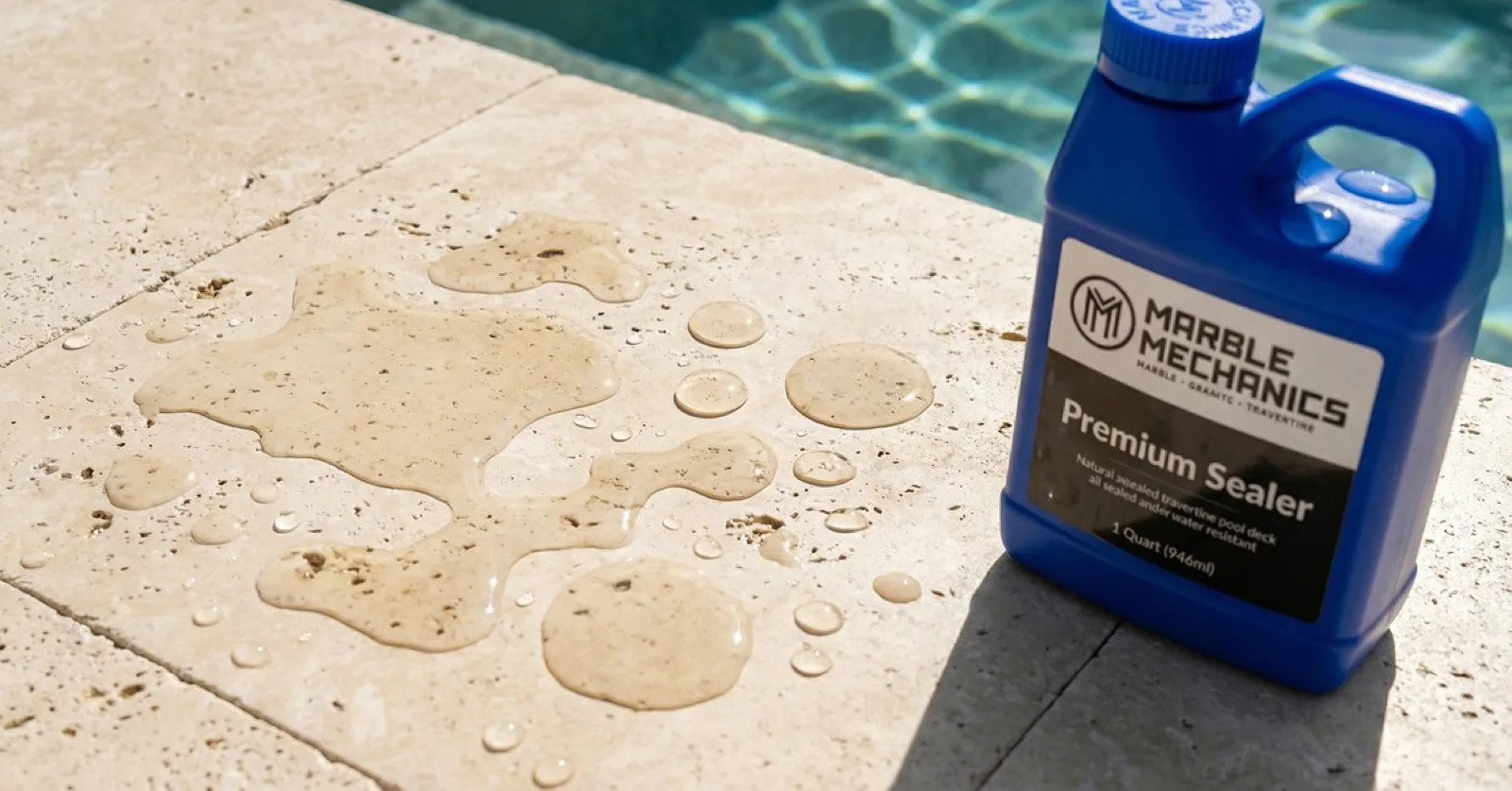
Quick test: does your sealer still work? Place water drops on travertine. If water beads up, sealer is intact. If water absorbs and darkens the area within minutes, resealing is needed.
Types of Sealers
Two main categories exist:
- Penetrating (impregnating) sealers: absorb into stone and protect from within; allow stone to breathe while blocking moisture; preferred for most Florida travertine; don't change appearance
- Topical sealers: sit on surface creating a physical barrier; add slight sheen and provide stronger stain protection; can peel or cloud over time in humid climates; trap moisture
Marble Mechanics uses penetrating sealers for most Tampa Bay travertine work because letting the stone breathe is essential in humid climates. There is more on product selection on the professional stone sealing page.
Travertine Pool Deck Maintenance in Tampa Bay
Pool decks experience maximum abuse from chlorine exposure, sunscreen residue, standing water, and bare-foot traffic.
Chlorine and Salt Water Impact
Traditional chlorine pools splash acidic water onto surrounding travertine every time someone enters or exits. Over months and years, this slowly etches the stone's surface, leaving white marks and rough patches near pool edges. Salt water pools are gentler but still deposit salt crystals that work into pores as they dry.
Pro tip: After pool use, hose down the deck with fresh water to dilute chemical residue before it sits on stone. This 5-minute habit significantly extends sealer life.
Joint and Fill Maintenance
Gaps between travertine pavers are filled with sand or polymeric sand. Florida's heavy summer rain gradually washes this material out, leaving gaps where water collects, weeds grow, and pavers shift. Check joints twice yearly and refill as needed, ideally before the June rainy season and after October.
When original resin fills in surface holes crack or pop out, small pits collect dirt and turn dark. Professional refilling restores smooth surfaces and prevents further deterioration.
Preventing Slips and Organic Growth
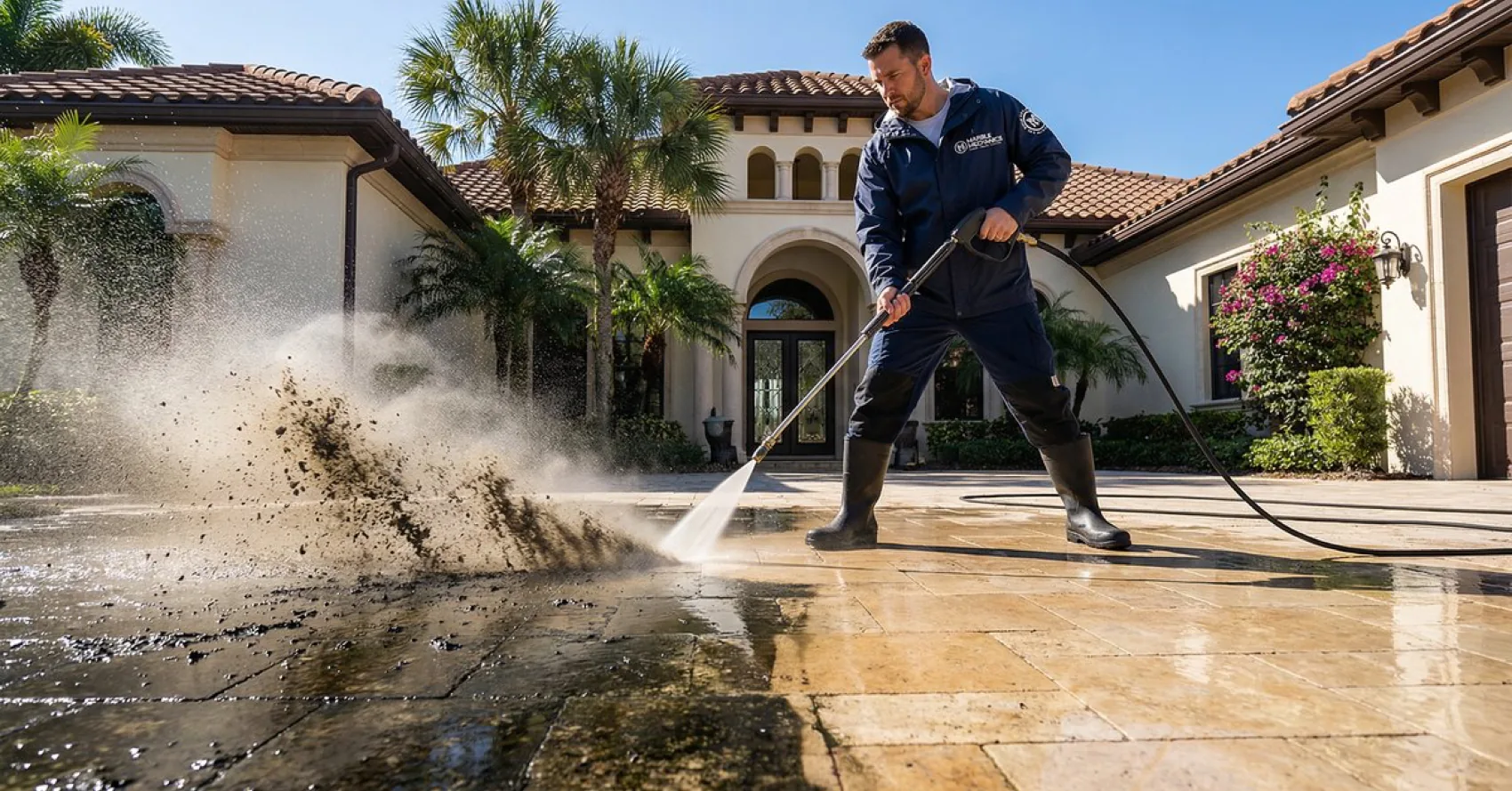
Tumbled travertine provides natural slip resistance when dry, but algae and mildew growth in Florida's humidity can make any surface slippery. Shaded areas near screen enclosures are the worst spots. Light cleaning with stone-safe algae remover every few weeks during summer keeps surfaces safe. Pressure washing works but must be careful; excessive pressure damages stone and blasts out joint material. Use low pressure with a wide fan tip.
Common Travertine Problems in Tampa Bay Homes
After 27 years restoring travertine across Tampa Bay, recurring problems appear across neighborhoods from Davis Islands to Dunedin, from Sarasota to New Tampa.
Yellowing and Discoloration
Travertine that gradually turns yellow is almost always a moisture problem. Water trapped beneath the stone wicks upward, carrying iron deposits that oxidize and stain surfaces. This is particularly common in Florida homes with slab foundations where ground moisture migrates through concrete. Poor drainage around outdoor patios causes the same problem from the surface down.
White Haze or Efflorescence
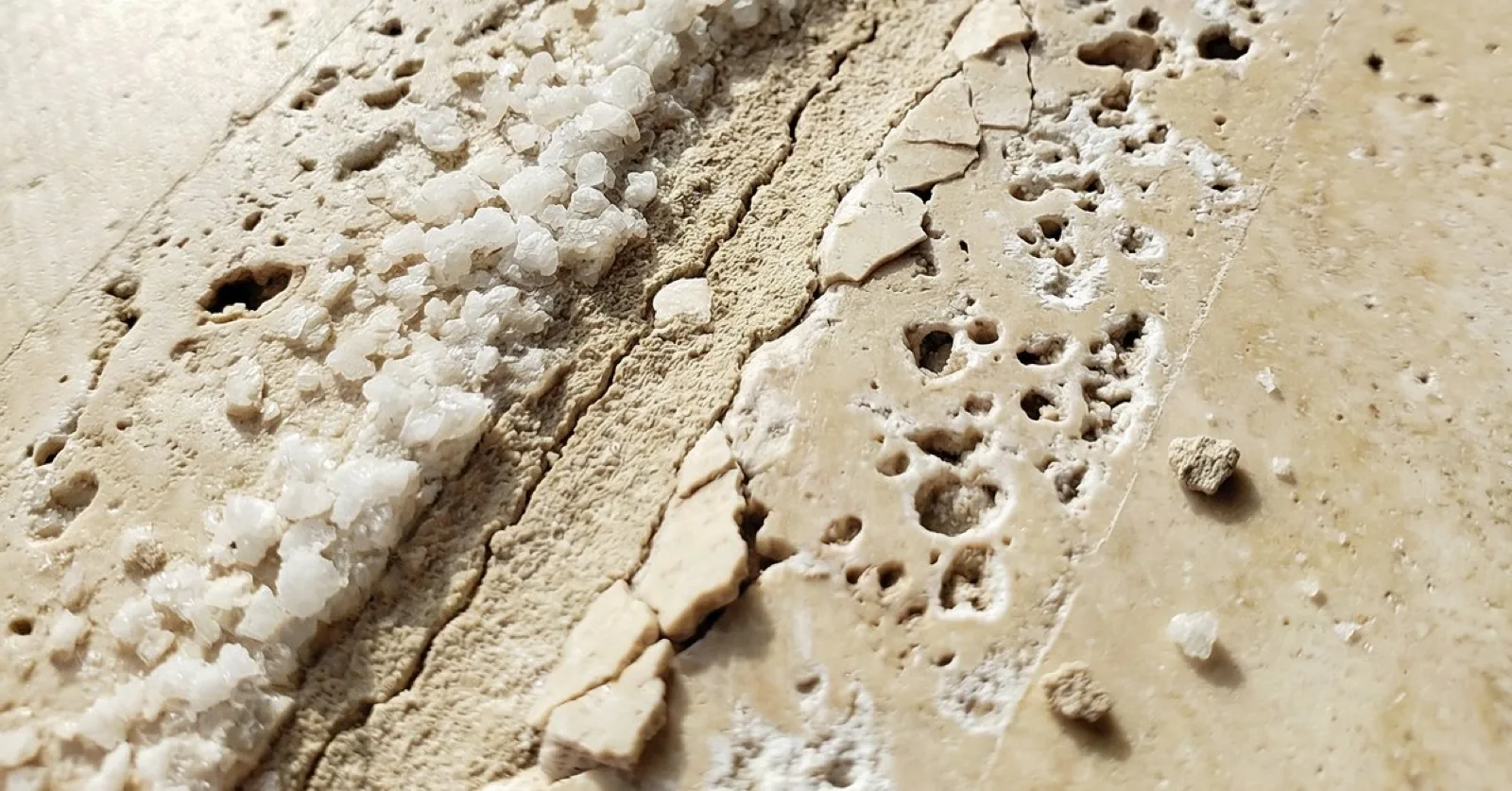
A white, powdery residue on travertine surfaces is efflorescence, caused by mineral salts migrating through stone as moisture evaporates. Tampa Bay's humidity slows evaporation, making efflorescence persistent. It's common on newly installed travertine and outdoor surfaces after heavy rain. Light cleaning removes it temporarily, but solving the underlying moisture issue provides a permanent fix.
Etching and Dull Spots
Approximately half of the calls to Marble Mechanics about "stained" travertine are actually etching. Etching happens when acidic liquids dissolve calcium in the stone's surface, leaving dull, lighter marks. It's actual surface damage, not surface staining. Cleaning products containing vinegar or citric acid are the most common cause. In upscale neighborhoods with frequent entertaining, wine and cocktail etching on bar tops and kitchen counters is regularly restored.
Cracking and Lippage
Travertine tiles that crack or develop uneven edges (lippage) usually result from installation problems or foundation movement. Florida's sandy soil shifts more than homeowners realize, especially after heavy rain or extended dry periods. Multiple tiles cracking in the same area may indicate foundation issues rather than stone issues.
Mildew in Grout Lines and Holes
Florida's humidity creates ideal mildew conditions, especially in bathrooms and outdoor spaces. When travertine's fill material deteriorates and exposes original holes, mildew takes root in pockets and becomes difficult to remove with surface cleaning alone. Professional restoration includes deep cleaning these pockets and refilling them to prevent recurring growth.
Seasonal Travertine Maintenance Calendar for Florida
Tampa Bay's weather doesn't follow traditional four-season patterns, so maintenance rhythms should reflect Florida's actual climate.
Spring (March to May)
Best time for annual professional inspection and sealing. Moderate humidity means sealers cure properly. Check all outdoor joints and fills after the dry season. Clean pollen buildup from textured surfaces.
Summer (June to September)
Rainy season. Focus on drainage and regular cleaning. Mildew growth accelerates on shaded surfaces. Hose pool decks after heavy rain. Do not seal during this period; sealers won't cure properly with daily rain.
Fall (October to November)
Second sealing window if spring was missed. Inspect outdoor travertine for summer damage. Refill joints washed out during rainy months. Clean organic stains from fallen leaves before they set.
Winter (December to February)
Driest, coolest months. Light maintenance only. Ideal time for indoor travertine projects like honing, polishing, or deep cleaning since humidity is lowest and work areas dry faster.
When Your Travertine Needs Professional Restoration
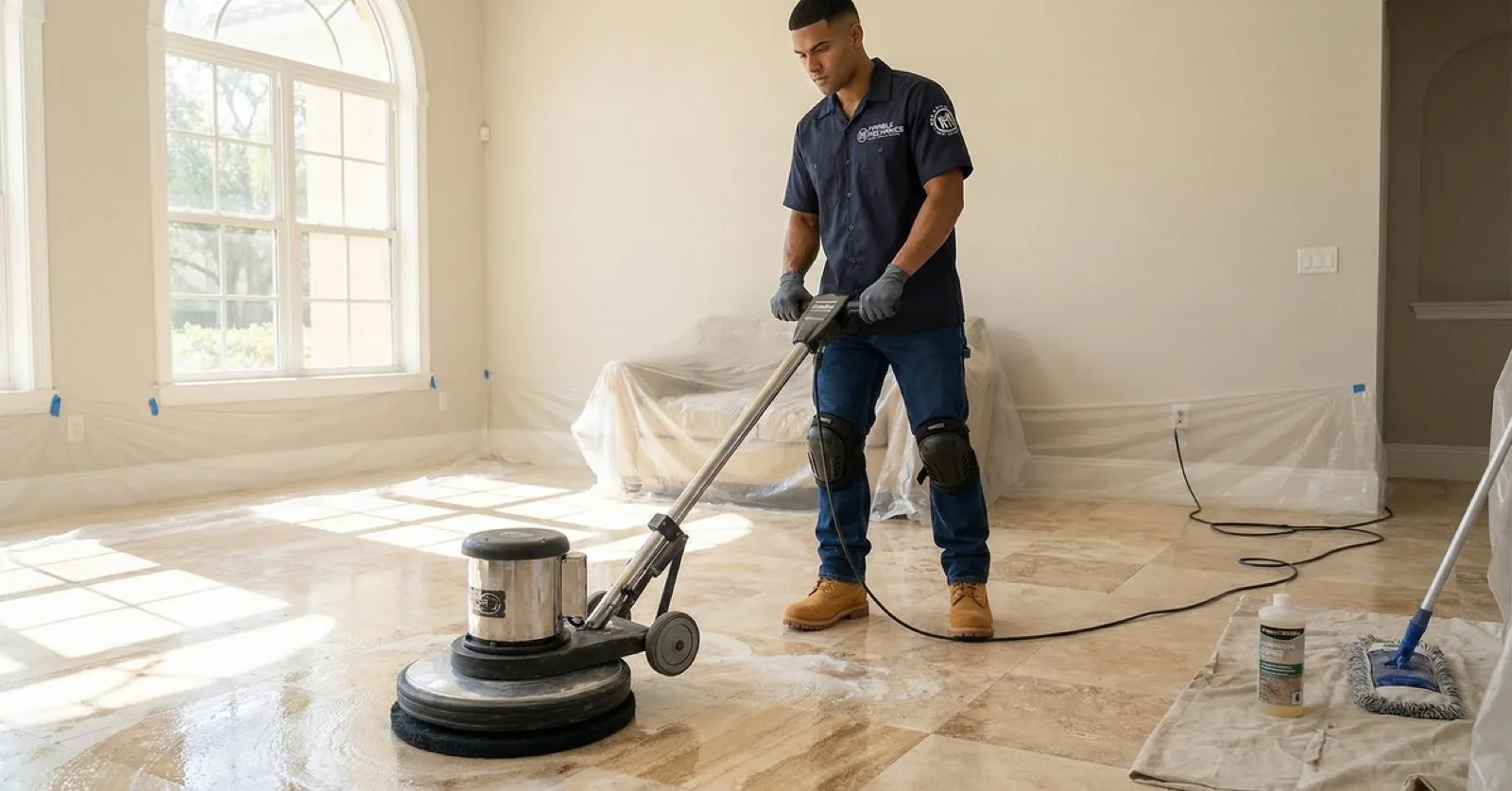
Regular maintenance extends travertine life significantly, but every surface eventually needs professional attention. Signs that professional help is needed:
- Widespread dullness that cleaning doesn't improve. The stone has lost its finish and needs honing or polishing.
- Deep scratches or traffic patterns visible across the floor. Surface-level scratches can be honed out; deep ones may need diamond grinding.
- Persistent stains that don't respond to poultice treatment. Some stains penetrate deep enough to require professional extraction.
- Fill material falling out across multiple tiles. Spot repairs work for one or two holes, but widespread fill loss needs professional refilling.
- Efflorescence that keeps returning after cleaning. The moisture source needs identification and addressing.
- Uneven tiles or lippage creating trip hazards. Grinding and leveling require professional equipment.
- Sealer failure across large areas. Stripping old sealer and reapplying properly is not a DIY job on large surfaces.
The difference between maintenance and restoration is important. Maintenance prevents problems; restoration fixes problems that maintenance can't solve. Our travertine polishing and restoration page covers what that work involves.
Travertine Maintenance Costs: What to Expect
Homeowners often ask whether travertine is "worth the maintenance." The honest answer is that well-maintained travertine adds real value to homes and lasts for decades. Neglected travertine becomes an expensive problem.
The Natural Stone Institute notes that natural stone flooring, including travertine, remains one of the most sought-after features in residential real estate.
| Service | Cost | Frequency |
|---|---|---|
| pH-neutral stone cleaner | $15 to $25 per bottle | Every 2 to 3 months |
| Professional sealing (indoor) | $1.50 to $3.00 per sq ft | Every 2 to 3 years |
| Professional sealing (outdoor / pool deck) | $2.00 to $4.00 per sq ft | Every 1 to 2 years |
| Professional restoration (honing and sealing) | $3.00 to $6.00 per sq ft | As needed |
| Joint and fill repair | $200 to $500 typical | As needed |
| Full travertine replacement | $15 to $30 per sq ft installed | Avoidable with maintenance |
Consistent maintenance costs a fraction of replacement and keeps stone performing for 50 years or more.
When the Filled Pits Open Up
Travertine sold in Florida is usually filled: the natural holes are packed with resin or cement at the factory. Outdoors, and in wet rooms, those fills crack and pop out over time, leaving small pits that collect dirt and turn dark. Sweep or vacuum the loose dirt before it packs in, and clean with a pH neutral cleaner and a soft nylon brush rather than a wire one. Deep grout cleaning is a job for tile and grout cleaning.
Important
If the filler in the pits has cracked, popped out or yellowed
That is a refilling job, and it is handled as part of restoration. Do not spot-fill with hardware store products. The color match almost never works, and a visible patch is harder to correct afterwards than the open pit was.