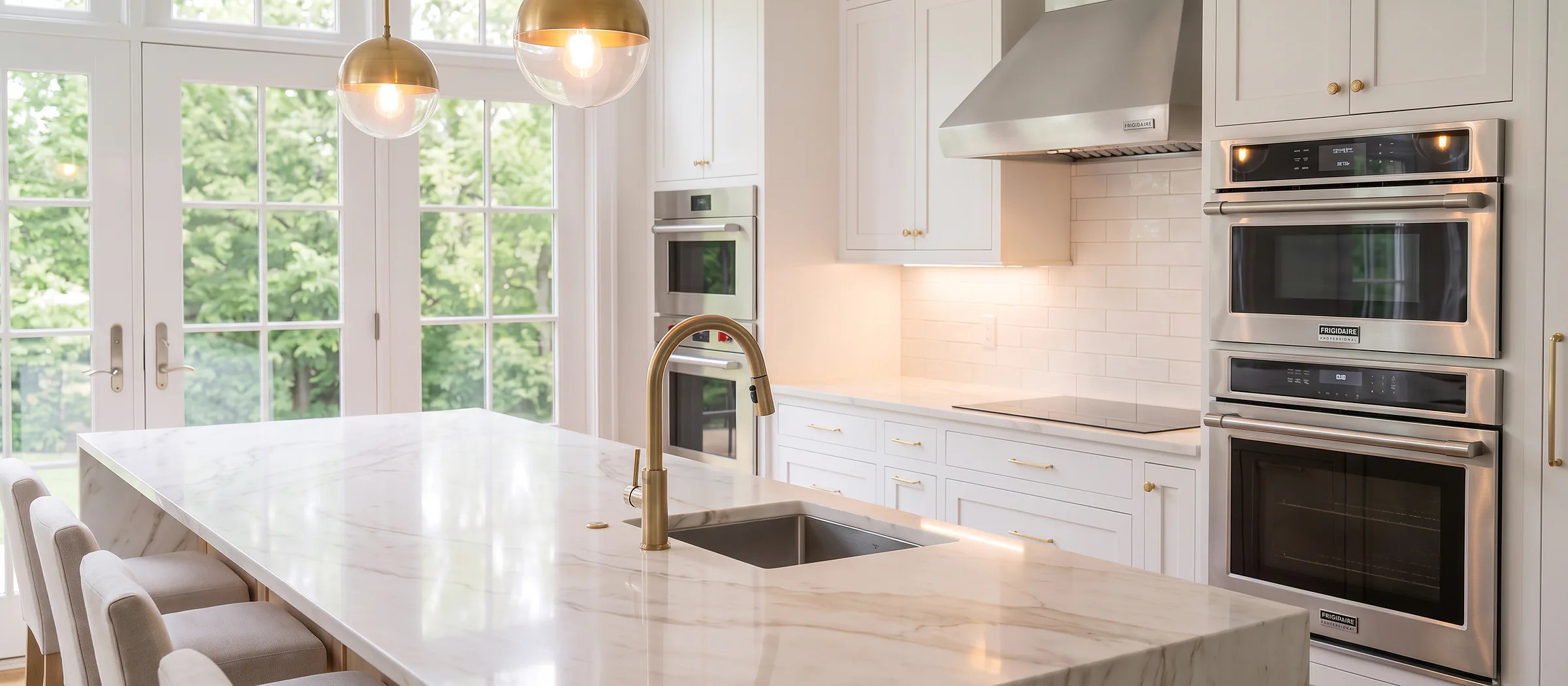
This stone countertop care guide starts from a simple fact: countertops are the hardest-working stone in the house. A floor gets walked on. A counter gets cooked on, cut on, spilled on and cleaned several times a day, and in Florida it gets more citrus than most kitchens anywhere.
For anything calcium based the rule is the same one the Tile Council of North America applies to tiled surfaces: pH neutral only. The acidic cleaners that cut through kitchen grease fastest are the ones that etch a marble counter permanently.
That is why counters need sealing more often than floors do, and why the material under your elbows matters more than it does anywhere else in the house.
Know What You Actually Have
Six materials turn up on Tampa Bay counters and they do not behave alike. The single most consequential confusion is quartzite against engineered quartz: similar names, opposite care.
Everything else in this stone countertop care guide depends on getting this right, because the same cleaner that is harmless on one of these will permanently dull another.
| Material | Chemistry | Needs sealing | What that means day to day |
|---|---|---|---|
| Granite | Silica based | Yes | Kitchen acids do not etch it. Seal it and it is the most forgiving surface in the room. |
| Marble | Calcareous | Yes | Etches from any acid. Beautiful and high-maintenance in a working kitchen. |
| Quartzite | Silica based, natural | Yes | Behaves like granite. Constantly confused with engineered quartz. |
| Engineered quartz | Stone dust in resin | No | Non-porous, so no sealing. The resin is heat-sensitive. |
| Travertine | Calcareous, with voids | Yes | Etches, and the voids can open as fill wears. |
| Onyx | Calcareous, translucent | Yes | The softest of the group. Usually a feature surface, not a work surface. |
Etching and Staining Are Not the Same Problem
Almost every countertop misunderstanding comes from treating these as one thing. They are opposites, and the difference decides whether a sealer helps you at all.
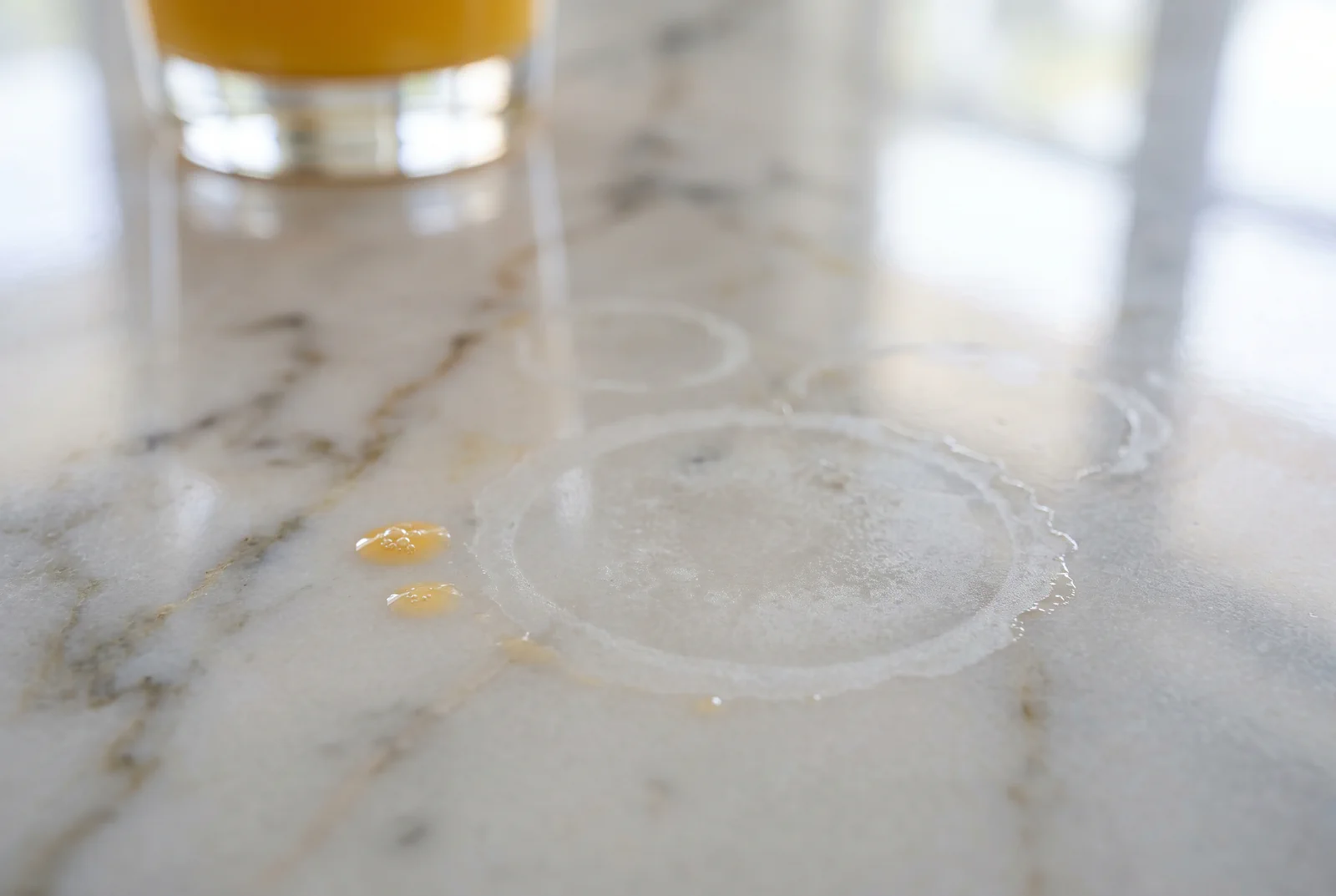
- A stain is in the stone. Something pigmented or oily has soaked into the pores. It is a darker patch. Sealing is exactly what prevents it, and a poultice is what removes it.
- An etch is missing stone. An acid has chemically dissolved the polished surface, leaving a dull mark. Sealing does not prevent it, and cleaning does not remove it, because there is nothing sitting there to clean off.
Only calcareous stones etch: marble, travertine, limestone, onyx. Granite and quartzite do not, which is why a granite counter tolerates a Florida kitchen so well.
Important
The sentence worth remembering
Sealing prevents staining. Nothing prevents etching except keeping acid off the stone. Anyone who sells you a sealer as protection against etch marks on marble is selling you something that does not exist.
The Daily Routine
Short, and deliberately boring.
- Wipe with warm water and a soft cloth for most of it, or a pH neutral cleaner made for natural stone.
- Blot spills rather than wiping them. Wiping spreads a spill across more surface and works it into the pores.
- Deal with citrus, wine, coffee and vinegar immediately. On a calcareous stone the clock is short.
- Dry the surface around the sink and faucet rather than leaving standing water, because Tampa's water is mineral heavy and leaves deposits.
What to keep off it: vinegar, lemon and citrus sprays, bleach, lime-scale and bathroom products, abrasive creams and scouring pads. Most all-purpose kitchen sprays are formulated for laminate and sealed wood.
Heat, Knives and Weight
Heat. Granite and quartzite came out of the ground under heat and do not care about a hot pan. Engineered quartz does, because the resin binding it is the weak point, and scorch damage to resin cannot be polished out the way damage to natural stone can. Since most kitchens have more than one surface, a trivet everywhere is the simpler habit.
Knives. Cutting directly on granite will not hurt the granite and will ruin your knives, because the stone is harder than the steel. It also scores through the sealer over time, which opens a route for staining. Use a board.
Weight and leverage. Overhangs, and the narrow runs of stone in front of and behind a sink cutout, are where a counter is weakest. Sitting or standing on an overhang is how cracks start.
Sealing a Countertop
Counters need sealing more often than floors, because a floor is not being wetted and wiped and cooked over several times a day. The wet zone around the sink and faucet always goes first, which is why a dark ring appears there before anywhere else.
Florida adds a wrinkle. Humidity keeps a surface damp for longer than it would be in a drier state, which gives a spill more time to work in, and hard water leaves mineral deposits around every tap. Any stone countertop care guide written for a national audience understates how often a Tampa kitchen needs checking.
Test rather than work to a calendar. Put a few drops of water on the surface and watch. If the stone darkens within a few minutes the sealer has worn through; if the water still beads after fifteen, it is fine. Test the sink area separately from the rest, because they will not be in the same condition.
Engineered quartz is the exception in both directions: it never needs sealing, and sealing it leaves a film on the surface rather than protection in it.
Getting a Stain Out
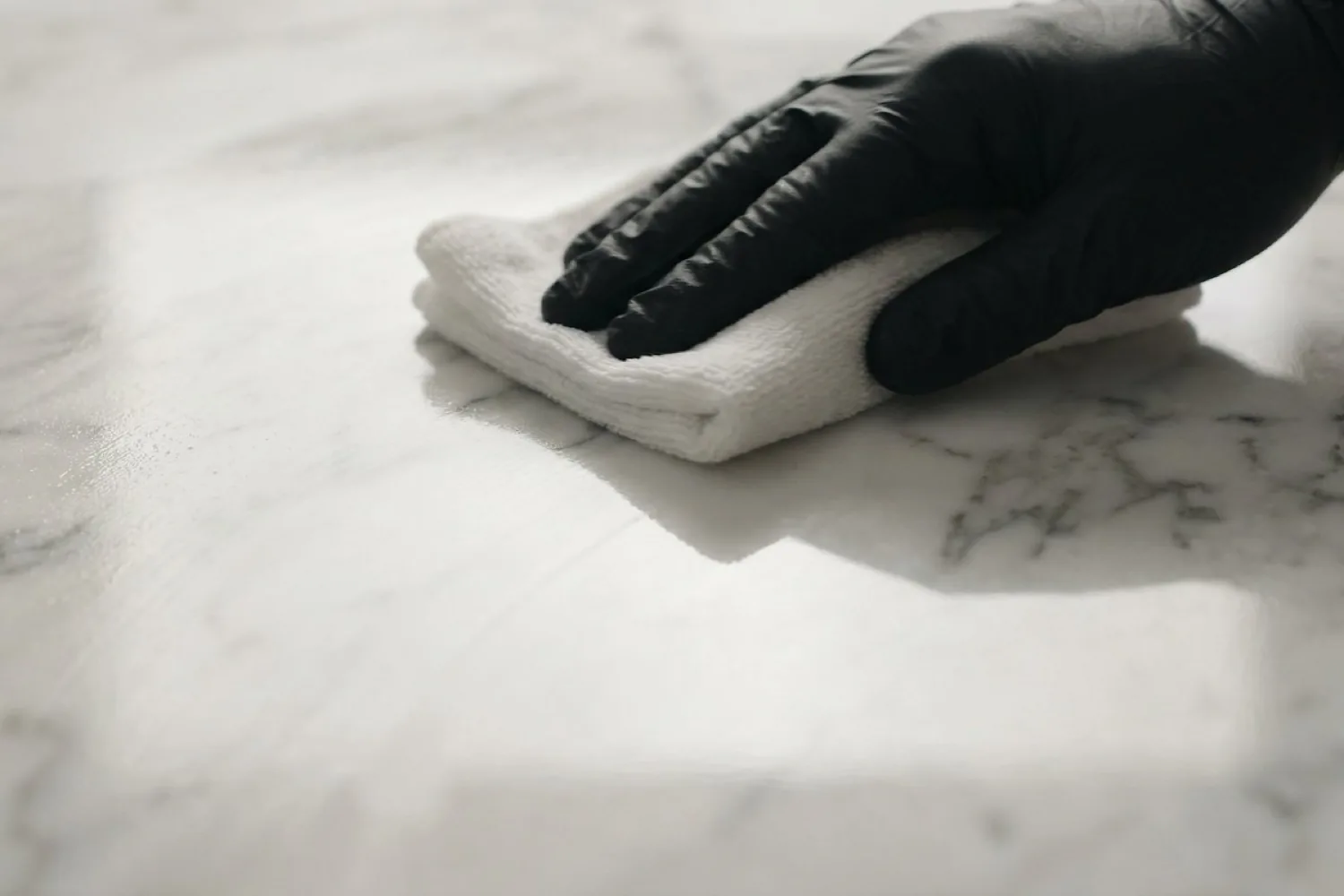
A stain is inside the stone, so it has to be drawn back out rather than scrubbed off. The standard method is a poultice: an absorbent paste applied over the stain, covered, and left to dry, pulling the stain up into itself as the moisture leaves.
This is the part of a stone countertop care guide worth reading before you need it. A stain that is treated the same day usually comes out. One that has been sitting for a month, under a sealer that was applied over the top of it, often does not.
What goes into the paste depends entirely on what the stain is, because oil, wine, rust and ink each respond to something different. This is the part worth getting right the first time. The wrong treatment can set a stain permanently, and a set stain is a much harder problem than the original one.
If the mark is dull rather than dark, stop: that is an etch, not a stain, and no poultice will touch it. Stone countertop polishing covers how etch marks are actually removed.
Bathroom Vanities Are a Different Problem
Same stone, different attack. A vanity does not see heat or knives, but it sees toothpaste, cosmetics, perfume, nail products and hair treatments, several of which are acidic or solvent-based and none of which are formulated with stone in mind.
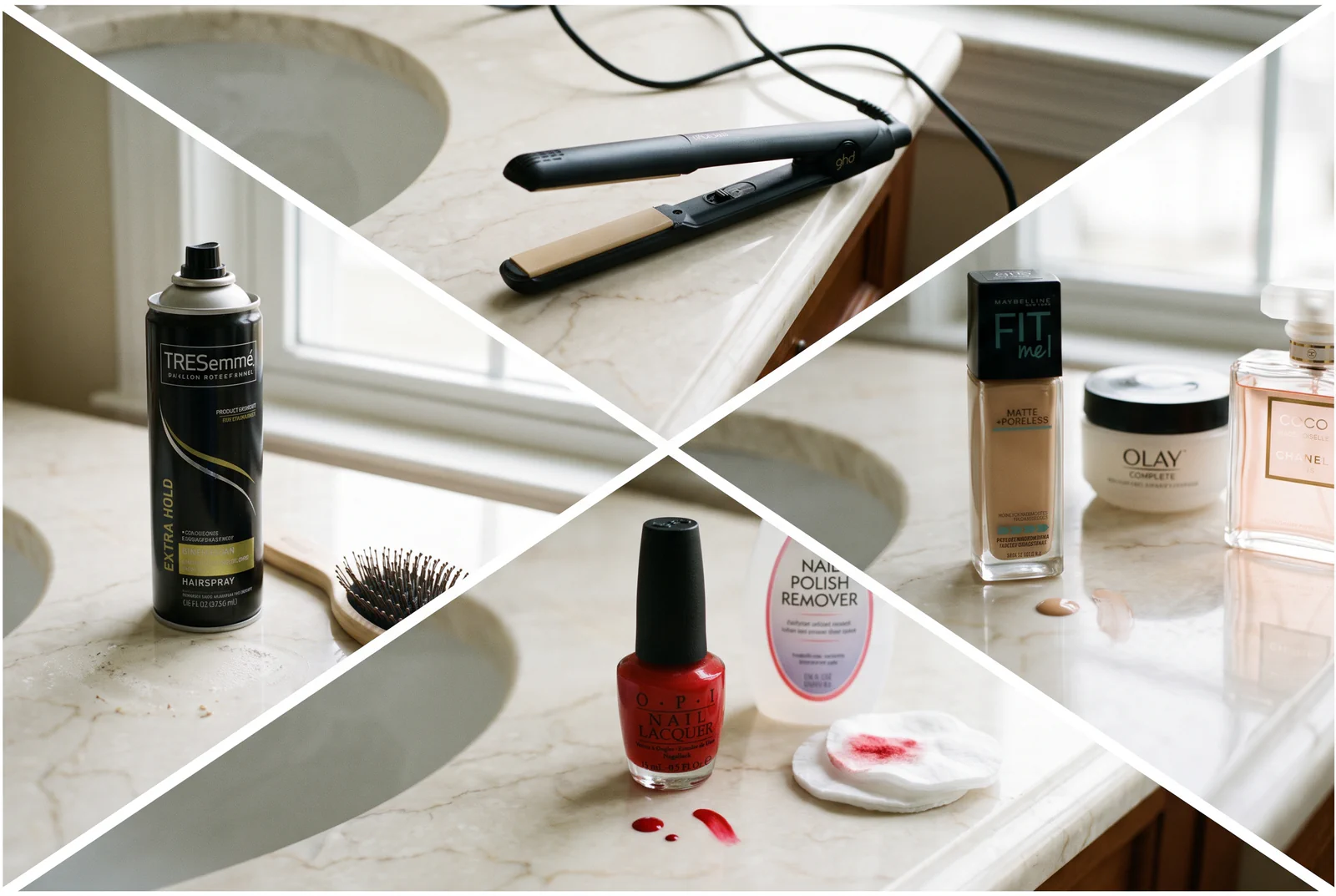
Perfume and nail polish remover are the two that surprise people most on a marble vanity. Both will mark it. So will a bottle of bathroom cleaner left standing on its side.
When It Needs a Professional
The test that works on any stone surface: dry it and look at it. If it is dull the moment it is dry, the problem is not dirt. The finish itself has been etched or worn, and restoration rather than cleaning is what brings it back.
Marble Mechanics works on countertops across Tampa Bay, and most of what we are called to fix started as something small cleaned with the wrong product. If anything in this stone countertop care guide leaves you unsure what your surface is or what it needs, the on-site assessment is free and we would rather look than guess.
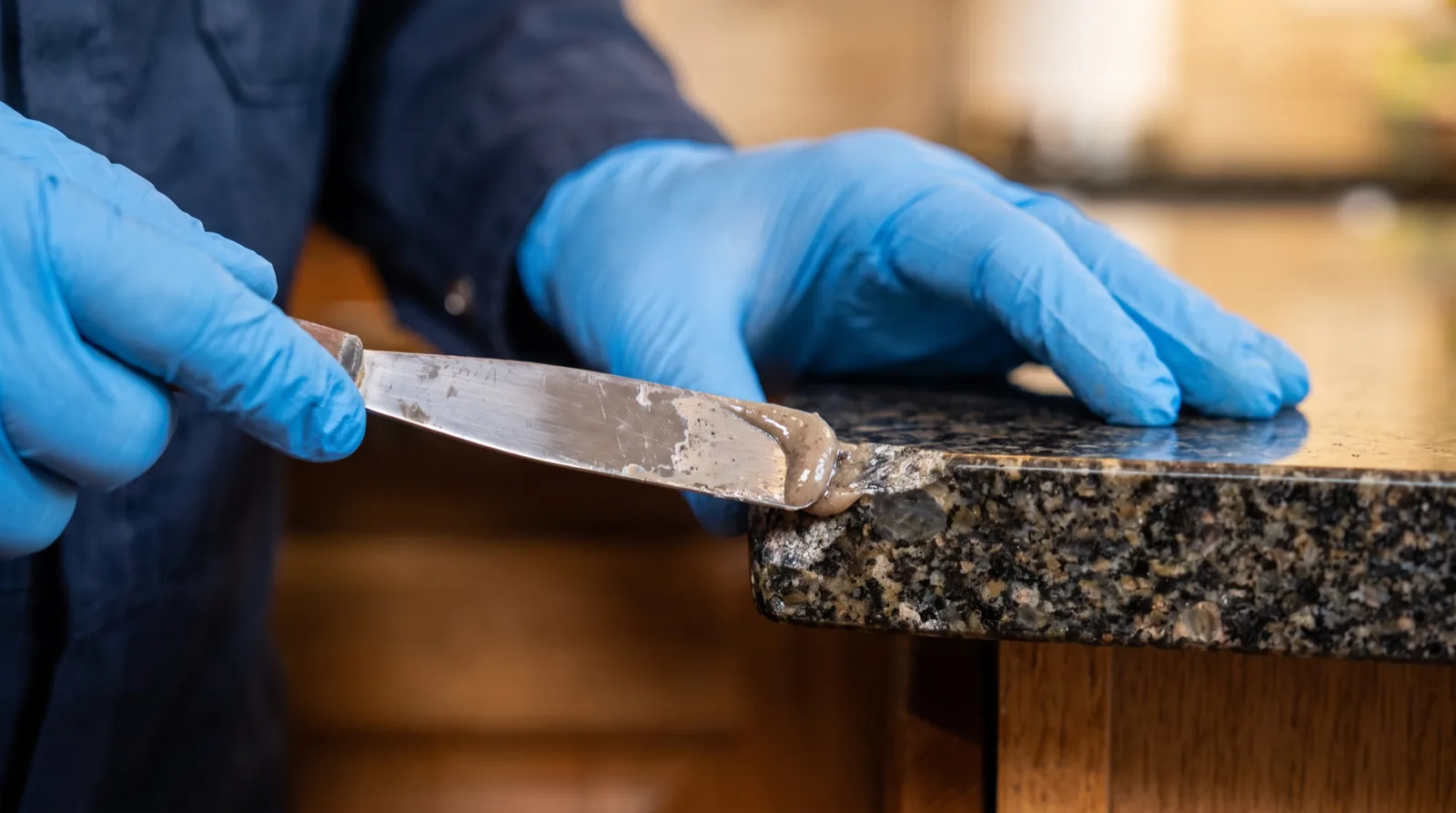
The other clear signals are a stain that will not lift, a chip or crack at an edge or around a cutout, and dark rings that stay dark. Chips are repairable with color-matched epoxy, leveled and polished flush, and catching one early stops it becoming a crack.
Guidance on stone care in general is published by the Natural Stone Institute, and Marble Mechanics recommends specific products after every service visit, matched to the material you actually have.