Marble Mechanics 813-625-3377
Limestone restoration

Limestone Restoration Tampa

Limestone is the softest of the stones commonly laid in Tampa Bay homes, and the most forgiving to look at when it is right. It also marks, etches and absorbs faster than anything it sits next to, which is why it needs a gentler hand than marble or granite.

  • Free on-site assessment
  • Written quote before any work begins
  • No obligation
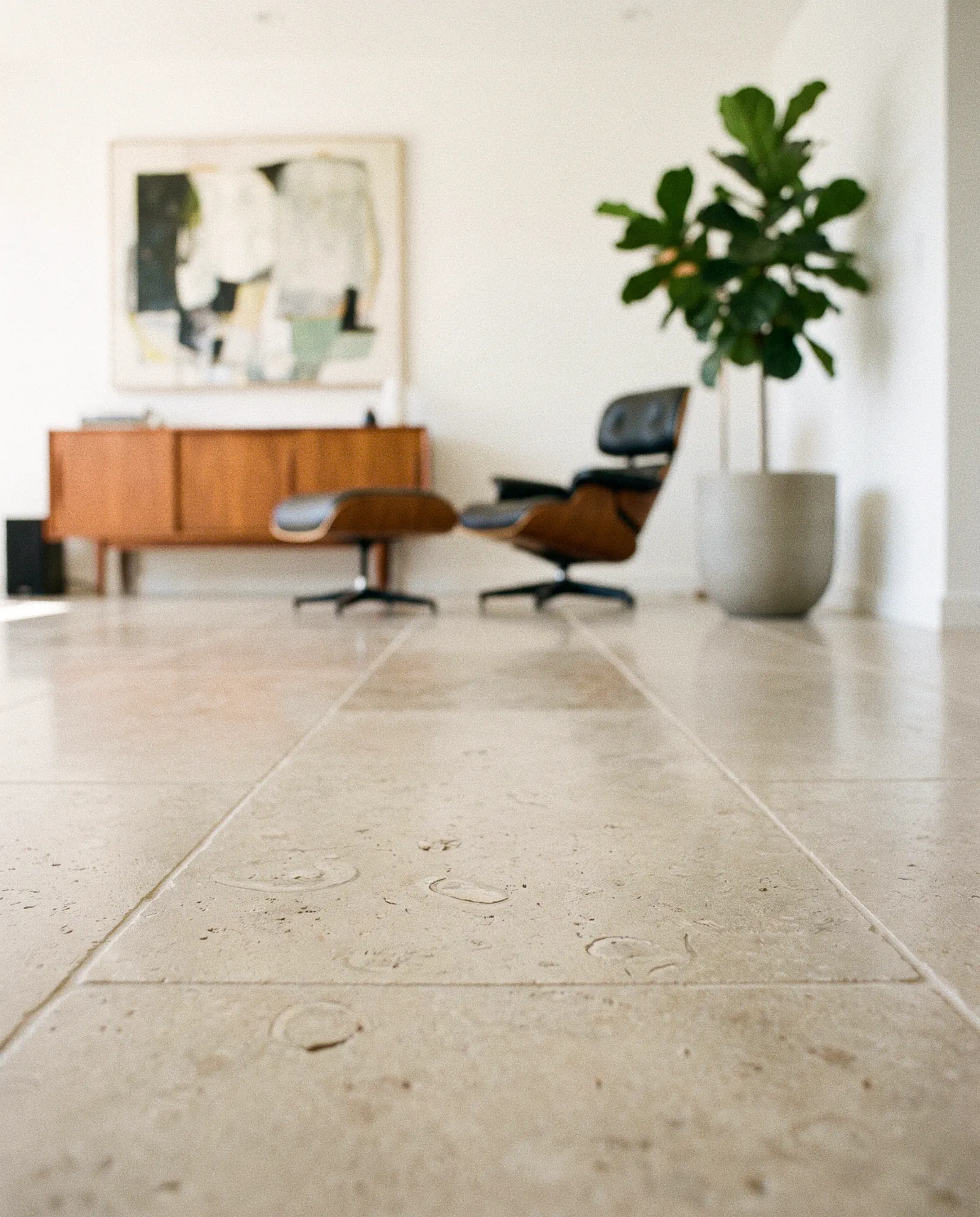
Limestone restoration in Tampa: a honed limestone floor with fossil shell inclusions running through a Tampa Bay living room
27+ Years of experience Restoring marble, travertine, granite and other natural stone.
27+Years of Experience
Five-Star Google Rating
79Cities Served
FreeOn-site Assessments

Marble Mechanics hones, repairs and seals limestone across Tampa Bay: floors, entries, showers, wall cladding and pool surrounds. Etch removal, scratch correction, void filling and sealing, with an abrasive sequence matched to a soft, porous stone rather than borrowed from a harder one.

Limestone is the softest and most absorbent of the calcareous stones we work on, which is why the Natural Stone Institute treats sealing it as routine maintenance rather than an upgrade. On a limestone surface in this climate the sealer is doing real work every day.

Call 813-625-3377 for a free estimate, or read on to see what limestone actually needs.

Limestone and Marble Are the Same Family

This is the most useful thing to know about limestone, because everything else follows from it. Marble is limestone that has been metamorphosed by heat and pressure. Both are calcium carbonate. What the heat and pressure did was make marble denser and harder.

So limestone behaves like marble, only more so. It etches from the same acids, it absorbs more readily, and it scratches more easily underfoot. A cleaning product that would slowly dull marble will mark limestone faster, and grit that would scuff marble will scratch limestone.

The visible difference is character. Limestone is sedimentary, so it frequently carries fossil and shell fragments and small natural voids. Those are the stone, not damage.

What Goes Wrong With Limestone in Florida

Etching. Acid dissolves calcium carbonate on contact, and Florida kitchens see more citrus than most. Fresh orange juice, key lime, grapefruit, wine and vinegar all leave a dull mark where the surface has been chemically eaten away. It is not a stain and it will not clean off.

Scratching. Sand tracked in from a beach, a pool deck or a garden is harder than limestone. On a floor it does its work underfoot, concentrated in entries and the first stretch of hallway.

Absorption. Tampa Bay's average relative humidity hovers around 74%, and limestone is porous enough to take moisture up and release it continually. Where the sealer has worn through, spills go in rather than sitting on top.

Hard water. The municipal water here is mineral heavy. In a limestone shower that means deposits that build on the surface and etch into it underneath.

Honed, Not Polished

Most limestone in Tampa Bay homes was installed with a honed matte finish, and most of it should stay that way. A honed surface suits the character of the stone, and it hides the small scratches a soft stone inevitably collects.

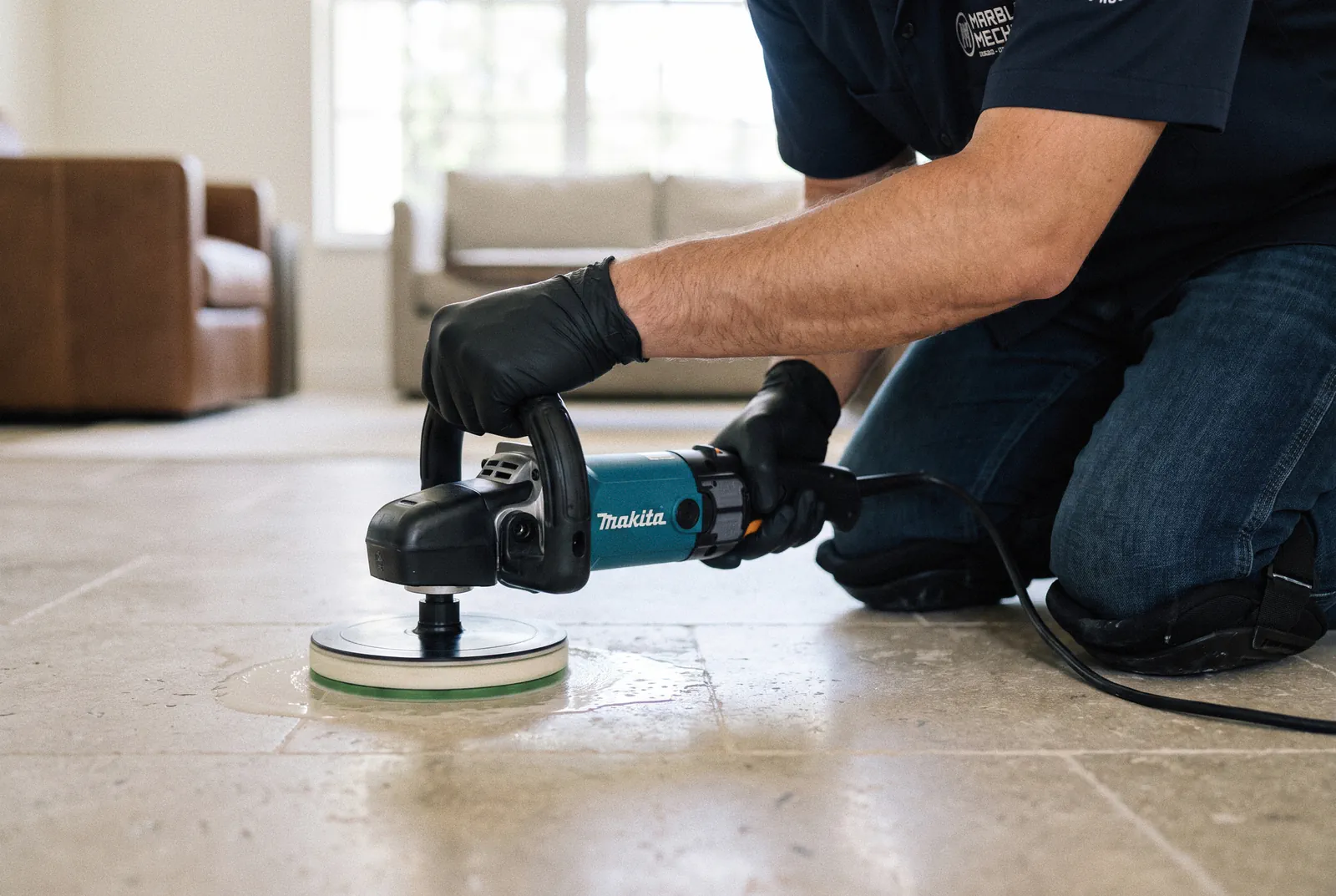
Limestone restoration in Tampa: a Marble Mechanics technician honing a limestone floor by hand with a variable-speed polisher
Limestone honed back by hand, matched to the stone rather than taken to a gloss.

Limestone can be taken to a polish. It is rarely the right call on a floor that takes traffic, because a polished soft stone shows every subsequent mark and does not stay looking right for long. On a feature wall or a low-traffic surface it is a reasonable choice.

Common question

Should the natural voids be filled?

That is a decision worth making before the work rather than during it. Filling gives a smoother, easier-to-clean surface. Leaving them keeps the texture and the fossil detail that made the stone worth choosing. Neither is wrong, but changing your mind halfway through a floor is expensive.

What Limestone Restoration Involves

  • Assessment. Confirming the stone, its finish, whether anything has been coated onto it, and whether the damage is etching, scratching, staining or all three.
  • Stripping, where needed. Wax and acrylic coatings come off first. They are not stone and cannot be honed.
  • Honing. Progressive diamond abrasives, starting at a grit chosen for how far down the damage goes. This is the step that removes etching and scratching.
  • Filling. Open voids and fossil pockets filled where a smoother surface is wanted.
  • Finishing. Taken to the matte honed finish the stone was installed with, or further if you want it.
  • Sealing. A penetrating sealer, with a shorter interval expected on exterior and pool-adjacent surfaces.

The work is done wet, so dust stays minimal and you do not need to leave the house. Most residential projects are completed in one day.

Sealing Limestone, and What Sealing Does Not Do

Limestone is the most porous of the calcareous stones commonly laid here, so sealing matters more on it than on marble or granite. Test rather than schedule: put a few drops of water on the surface and watch. If the stone darkens within a few minutes, the sealer has gone.

What sealing does is resist staining. What it does not do is prevent etching. An acid that reaches the stone will etch it whether the stone is sealed or not, because etching is a chemical reaction with the material rather than a mark sitting on top of it. Keeping acid off limestone is the only thing that prevents it.

Professional stone sealing covers what goes on each surface and how it is applied.

What Limestone Restoration Costs

Every job is priced after we see the stone. Two limestone floors of the same size can need very different work depending on how deep the damage goes.

What determines the cost:

  • Square footage, and whether it is floors, walls, a shower, or a combination.
  • How deep the etching and scratching goes, which sets the starting grit and the number of passes.
  • Whether there are coatings to strip first.
  • Whether voids are being filled, and how many.
  • Whether the surface is interior, exterior or pool-adjacent, which changes the sealer.

Every project starts with a free on-site assessment and a written, line-by-line quote before any work begins. No hidden fees, no surprises.

Why choose Marble Mechanics

Why Choose Marble Mechanics

Owner-Operated, Not a Franchise

Oscar Tineo has 27+ years of hands-on stone restoration experience. When you call Marble Mechanics you get Oscar, not a rotating crew following a corporate manual.

A Gentler Process for a Softer Stone

Limestone does not take the same approach as granite or even marble. It is softer and more porous, and the abrasive sequence and the finish are matched to that rather than applied from a manual.

Florida-Specific Knowledge

Humidity around 74%, salt air on coastal properties, hard water and a citrus-heavy kitchen all work on calcareous stone. Marble Mechanics has worked exclusively in this market for 27+ years.

Free Assessment, Written Quote

Every job starts with a free on-site assessment and a written, line-by-line quote before any work begins. You approve the number before we touch the stone.

Frequently asked

Limestone Restoration FAQ

The questions homeowners ask us most, answered before you book.

The questions Tampa Bay limestone owners ask most.

Book an estimate
Can limestone be restored?

They are closely related and that is worth knowing, because it explains the care. Marble is limestone that has been metamorphosed by heat and pressure, which makes it denser and harder. Both are calcium carbonate, so both etch from the same acids. Limestone is the softer, more porous of the two, which means it does everything marble does and tends to do it faster.

Can limestone be resurfaced?

Because it is softer than most stone people compare it to, and because sand is harder than it is. Grit walked in from outside is an abrasive, and on limestone it leaves marks sooner than it would on granite or even marble. Doormats at every entry and dry sweeping before mopping do more to protect a limestone floor than any product does.

How do you restore limestone?

Yes, in almost every case. An etch is a small area where acid has chemically dissolved the surface, so cleaning it does nothing. The fix is to take the surface back to an even finish with progressive diamond abrasives. On limestone this is usually done to a honed finish rather than a polish, which is both what suits the stone and what most limestone was installed as.

Can limestone be smoothed?

Honed, in most cases, and most limestone was installed that way. A matte honed finish suits the character of the stone and, more practically, it hides the small scratches a soft stone inevitably collects. A polish on limestone can be done, but it shows every subsequent mark, and on a floor that takes traffic it rarely stays looking right for long.

What happens if you don't seal limestone?

More often than denser stone, because limestone is the more porous of the calcareous stones and Tampa Bay's humidity keeps moisture in it. Rather than working to a calendar, test it: put a few drops of water on the surface and watch. If the stone darkens within a few minutes the sealer has worn through. Sealing prevents staining; it does not prevent etching, and nothing does except keeping acid off the stone.

What not to use to clean limestone?

Fossils and natural voids, and they are original to the stone rather than damage. Limestone is a sedimentary rock, so shell and fossil fragments are part of what it is made of. Small open voids can be filled during restoration if you want a smoother surface, but many owners prefer to keep the texture, and that is a decision worth making before the work rather than during it.

Is Dawn dish soap safe for limestone?

Not as a routine cleaner. Dish soap is made to cut grease and it leaves a film that builds up, dulls the surface and holds dirt, and limestone is soft and porous enough to show that faster than a harder stone would. It is not acidic, so it will not etch the way vinegar or a bathroom cleaner does, but it is still the wrong tool. Use a pH neutral cleaner made for stone, a damp microfiber mop and dry the floor after.

Can you use Dawn dish soap on limestone?

You can without damaging the stone, but it is not what limestone wants day to day. The soap film it leaves builds up and reads as a dull, slightly cloudy floor, and people then scrub harder, which scratches a soft stone. Where it genuinely helps is a one-off greasy spill, rinsed thoroughly afterwards. For everything else, a pH neutral stone cleaner does the job without leaving anything behind.

Service areas

Limestone Restoration Across Tampa Bay

Marble Mechanics restores limestone throughout the Tampa Bay region.

Marble Mechanics stone restoration service area map for Tampa Bay The 6 Florida counties Marble Mechanics serves: Hillsborough, Pinellas, Pasco, Manatee, Sarasota, Polk. 40 cities are marked. Hillsborough County, 33 cities served Pinellas County, 19 cities served Pasco County, 9 cities served Manatee County, 8 cities served Sarasota County, 5 cities served Polk County, 5 cities served Valrico, Hillsborough County Westchase, Hillsborough County Carrollwood, Hillsborough County Lutz, Hillsborough County Ruskin, Hillsborough County Apollo Beach, Hillsborough County Temple Terrace, Hillsborough County Sun City Center, Hillsborough County Largo, Pinellas County Dunedin, Pinellas County Palm Harbor, Pinellas County Tarpon Springs, Pinellas County Seminole, Pinellas County Pinellas Park, Pinellas County St. Pete Beach, Pinellas County Land O Lakes, Pasco County New Port Richey, Pasco County Trinity, Pasco County Zephyrhills, Pasco County Palmetto, Manatee County Lakewood Ranch, Manatee County Parrish, Manatee County Osprey, Sarasota County Siesta Key, Sarasota County Winter Haven, Polk County Auburndale, Polk County Bartow, Polk County Davenport, Polk County Tampa, Hillsborough County Tampa Brandon, Hillsborough County Brandon Plant City, Hillsborough County Plant City St. Petersburg, Pinellas County St. Petersburg Clearwater, Pinellas County Clearwater Wesley Chapel, Pasco County Wesley Chapel Dade City, Pasco County Dade City Bradenton, Manatee County Bradenton Sarasota, Sarasota County Sarasota Venice, Sarasota County Venice Lakeland, Polk County Lakeland Riverview, Hillsborough County Riverview
Stone restoration across 79 cities in Tampa Bay. Based in Tampa.
Hillsborough County 33

Tampa, South Tampa, Davis Islands, Hyde Park, Bayshore Beautiful, Palma Ceia, Beach Park, Culbreath Isles, Avila, Swann Estates, Harbour Island, Westshore, Channelside, Brandon, Riverview, Valrico, Seffner, Mango, Lithia, Fish Hawk, Plant City, Ruskin, Sun City Center, Apollo Beach, Gibsonton, Carrollwood, Lutz, Temple Terrace, Westchase, New Tampa, Town N Country, Ybor City, Seminole Heights

Pinellas County 19

St. Petersburg, Clearwater, Largo, Dunedin, Palm Harbor, Safety Harbor, Tarpon Springs, Tierra Verde, St. Pete Beach, Treasure Island, Madeira Beach, Indian Rocks Beach, Redington Beach, Indian Shores, Seminole, Pinellas Park, Gulfport, Belleair, Pass-a-Grille

Pasco County 9

Wesley Chapel, Land O Lakes, New Port Richey, Port Richey, Hudson, Odessa, Trinity, Zephyrhills, Dade City

Manatee County 8

Bradenton, Palmetto, Lakewood Ranch, Anna Maria Island, Holmes Beach, Longboat Key, Parrish, Ellenton

Sarasota County 5

Sarasota, Osprey, Venice, Nokomis, Siesta Key

Polk County 5

Lakeland, Winter Haven, Auburndale, Bartow, Davenport